




Why your heat pump smells like burning in Florida

After you send the request, you're done searching.

Hand off my repair

Why does my heat pump smell like it's burning?

A burning smell from a heat pump gets your attention fast, especially when it's running flat out to keep the house livable through a Florida summer. Most of the time the smell isn't fire. It's usually dust burning off a coil or a motor, or something electrical heating up more than it should. Either way, it's worth figuring out before the system that keeps your home comfortable shuts down or gets worse.

Dust burning off, or a motor or electrical part overheating

A light burning smell the first time you run the heat pump after it's sat idle is usually dust on the coil or in the blower burning off, and it clears in a few minutes. A smell that lingers or gets stronger points to something else: a motor bearing wearing out, a belt rubbing where it shouldn't, or a wiring connection that's loose and heating up under load. In Florida, heat pumps run for most of the year to keep up with the heat and humidity, which means more hours on the motor and electrical parts than a system running only part of the year. That extra runtime is also why a developing problem tends to show up sooner here than it would somewhere with a shorter cooling season.

A woman with long light-brown hair in a gray knit sweater sits in a living room looking off to the side, with a sectional sofa, houseplant, lamp, wooden table and large windows behind her.
A woman in a chunky gray turtleneck sweater sits indoors looking off to the side, with a blurred dining table, chairs, pendant lamp and window behind her.
A woman in a cream knit sweater with her hair in a bun stands near a window, looking off to the side, with a gray sofa, houseplant and open kitchen with pendant lights blurred behind her.
A woman with long brown hair in a cream knit sweater stands near a window, looking to the side, with a white sofa, shelving, and a hallway visible behind her.

Is this something you need to worry about right now?

A smell like hot dust usually fades within an hour of the system running and doesn't come back. If what you're noticing is sharper, more like an electrical burn or hot plastic, or if it comes with the unit tripping its breaker, shutting off on its own, or blowing air that isn't actually cold, that's worth acting on. A motor or circuit board that's overheating can fail outright, and with a Florida summer outside, a dead heat pump means the house heats up fast for whoever's home all day. If you smell smoke, or the smell doesn't ease off, shut the system down at the thermostat until someone can look at it.

A gray outdoor air conditioner condenser unit on a concrete pad beside a house with horizontal siding and an electrical disconnect box, surrounded by grass.

Dust burning off the coil

A heat pump pushes air across a coil and through a blower housing that sits still most of the day once the unit stops cycling. Dust settles on both. When the system kicks back on after sitting idle, that dust meets heat before the airflow has cleared it out. That first burst of warm, dusty air is what you're smelling, and it clears once the air moving through has swept the coil clean again.

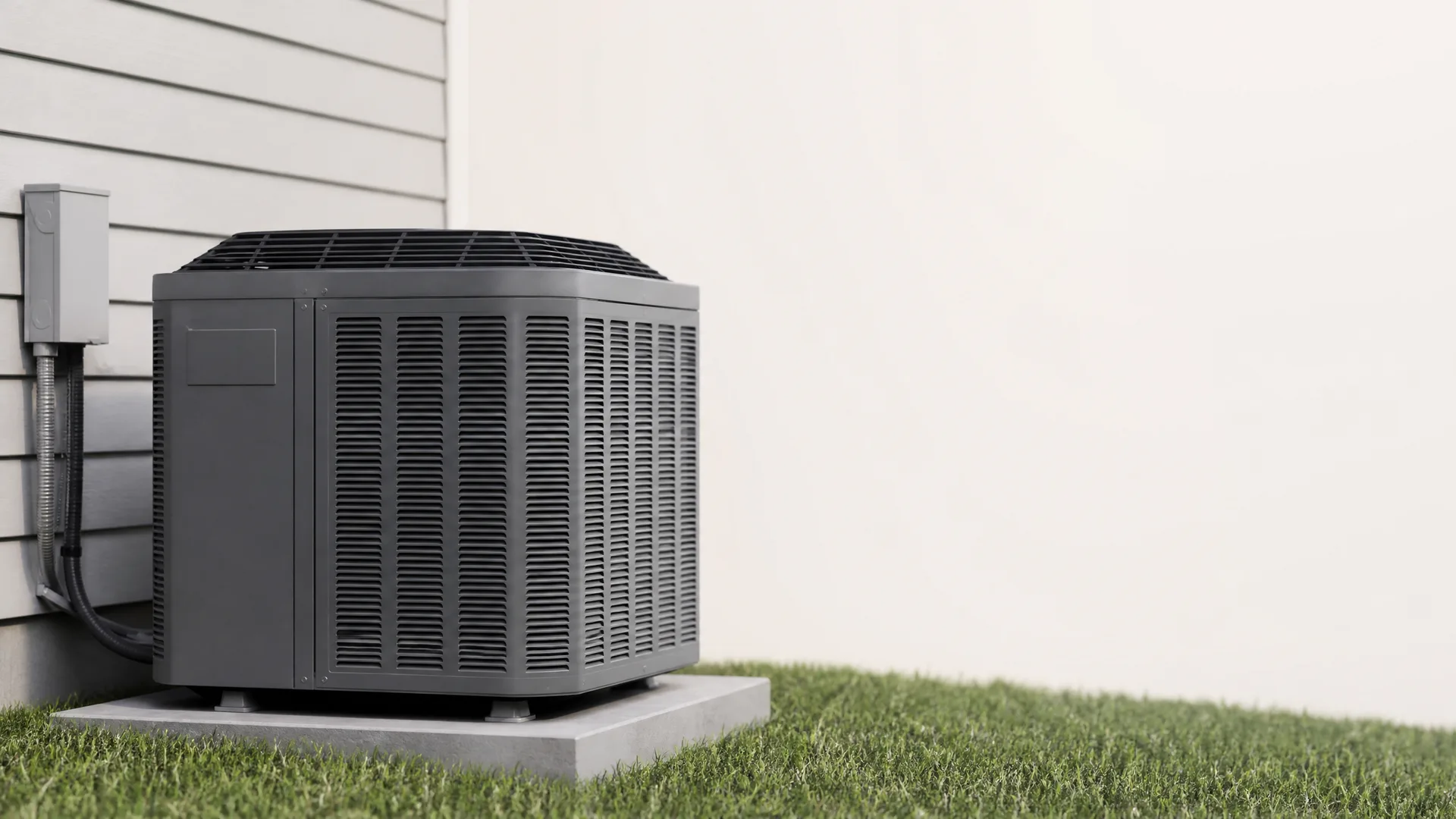
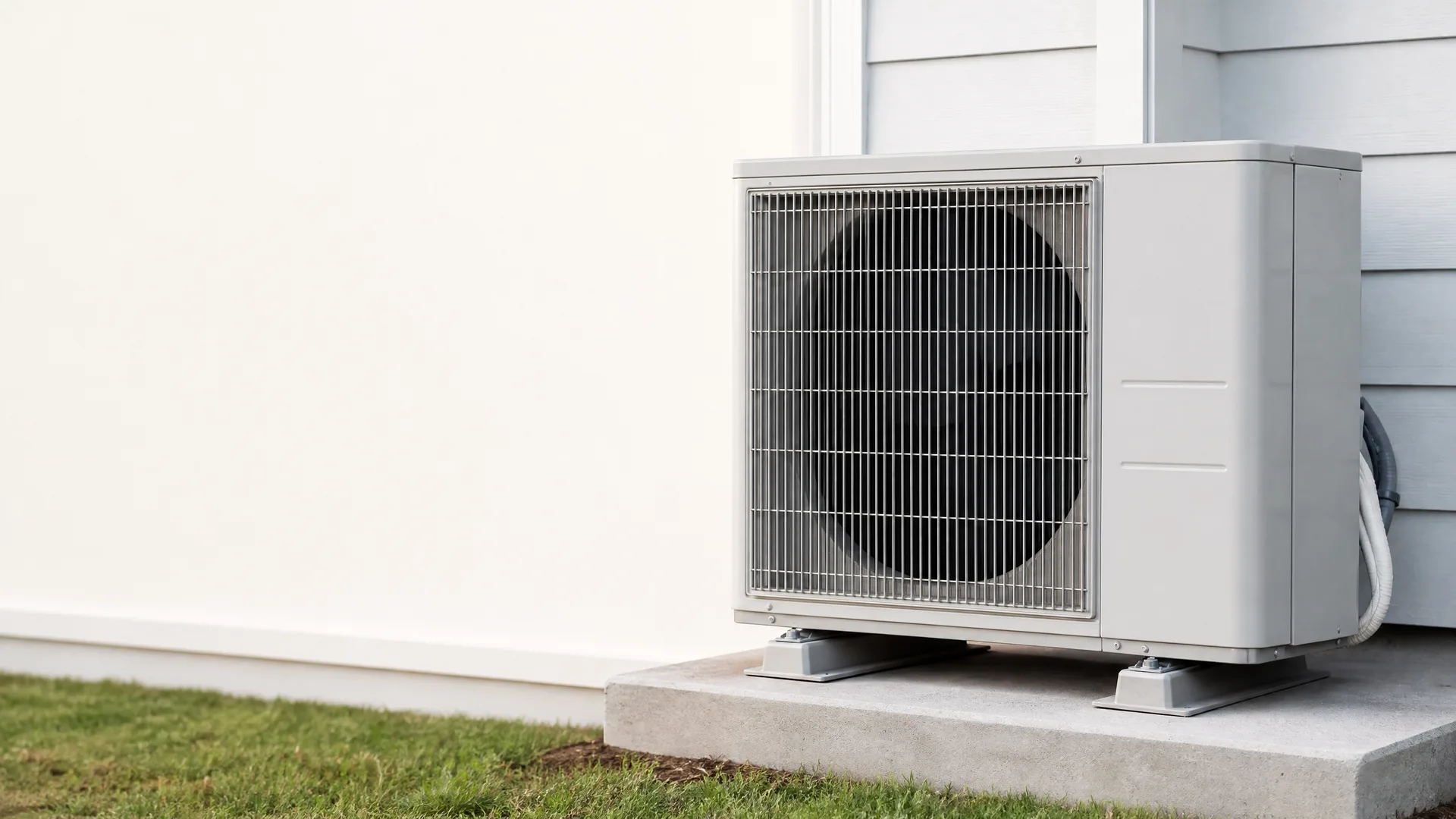
A white outdoor heat pump unit on a concrete pad beside a house with horizontal lap siding, with a plain light wall and grass lawn to the left.

What an electrical smell means

A hot dust smell comes from outside the cabinet, carried on the air. An electrical burn smell means something inside the unit is heating up that shouldn't be, often a wire connection or a motor winding under strain. That smell doesn't fade the way dust does because the part causing it stays hot as long as the system keeps running, and running it longer only pushes more current through whatever's already overheating.

Power costs 15.21 cents per kilowatt-hour statewide

At 15.21 cents per kilowatt-hour, every extra hour your heat pump runs to chase down a burning smell shows up on the bill. A unit working harder than it should, because of a dirty coil or a strained motor, costs you more to run until someone fixes what's actually wrong.

EIA-861 2025 statewide residential average

The smell shows up once and fades

You catch it the first time the heat pump kicks on after sitting idle, maybe after a thunderstorm knocked the power out for a bit, or the thermostat finally called for heat on a rare cool morning. It's dust burning off the coil. Run the system another hour and the smell is gone, and it doesn't come back the next time it cycles on. Nothing about the house changes. The air coming out doesn't smell different once that first hour passes, and nobody in the house mentions headaches or itchy eyes. This is the version that doesn't need a call.


The smell keeps coming back

This time it doesn't fade. The heat pump runs for a while, shuts off, kicks back on, and the smell is there again, maybe sharper than before, more like hot plastic or something electrical. It shows up whether the system just started or has been running for an hour. Someone in the house starts noticing it even in rooms farther from the vents. That pattern, the smell returning cycle after cycle instead of airing out, points to something actually wrong inside the unit rather than dust that burns off once and clears.

A woman and a child wrapped together in a knitted gray blanket on a couch, with the child's head resting on her shoulder and a lit table lamp and houseplant in the background.
An older woman with gray hair in a bun and glasses, wearing a beige knit sweater, smiles while looking to the side in a warmly lit kitchen, with a loaf of bread on the counter in the foreground and a snowy scene outside the window.
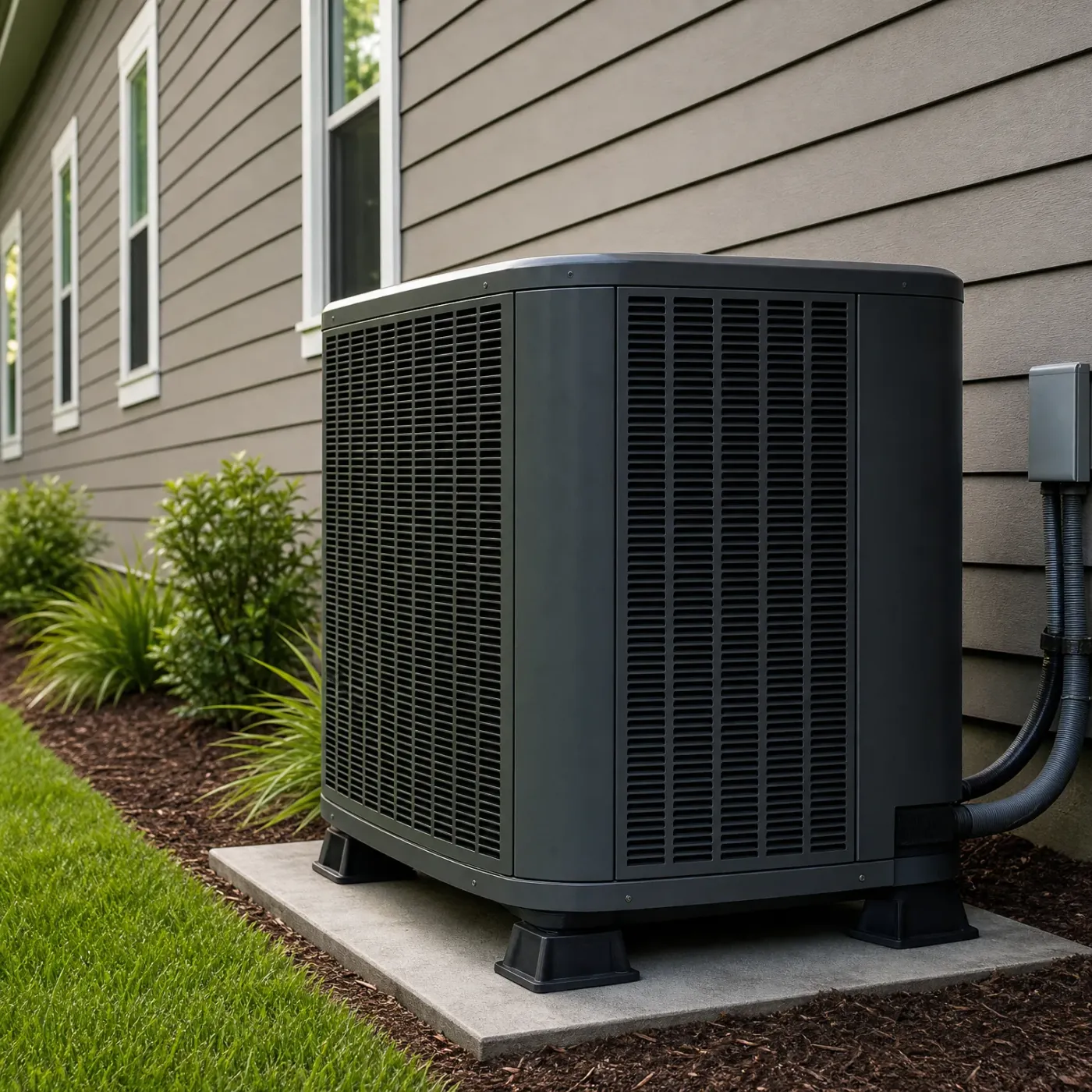
A dark gray outdoor condenser unit on a concrete pad beside a house with horizontal lap siding, with mulch beds, shrubs, and lawn nearby and conduit running to a wall-mounted box.

One request and it's handed off

Your request stays with one local pro.

Send the request today and stop worrying about who to call.

Send it today

You only hire the pro if you want to.

Wait It Out or Call Someone

Let it ride

  • If the smell is faint, dusty and gone within an hour, waiting to see if it returns costs you nothing but a little worry.
  • A heat pump that sat idle after a storm knocked the power out will often throw this smell once and not repeat it.
  • You keep the house running through the heat without an outage while a contractor gets scheduled.
  • If it doesn't come back on the next cycle, there was likely nothing wrong with the unit itself, just dust that had time to settle.

Get it looked at

  • A sharp, electrical or plastic smell means something is heating that shouldn't be, and that doesn't fix itself by running the system more.
  • A local contractor who services heat pumps all summer knows what usually causes that smell in this kind of heat and humidity and can check it fast.
  • Sending one request means one contractor calls, not five companies competing for the job.
  • If the smell comes back every time the unit cycles, it's not dust anymore and running the system keeps stressing whatever's failing.
  • A strained motor or a dirty coil makes the unit work harder, and that shows up on your bill before it shows up as a breakdown.
  • Catching it early usually means a smaller repair than waiting until a part burns out and takes the system down with it.
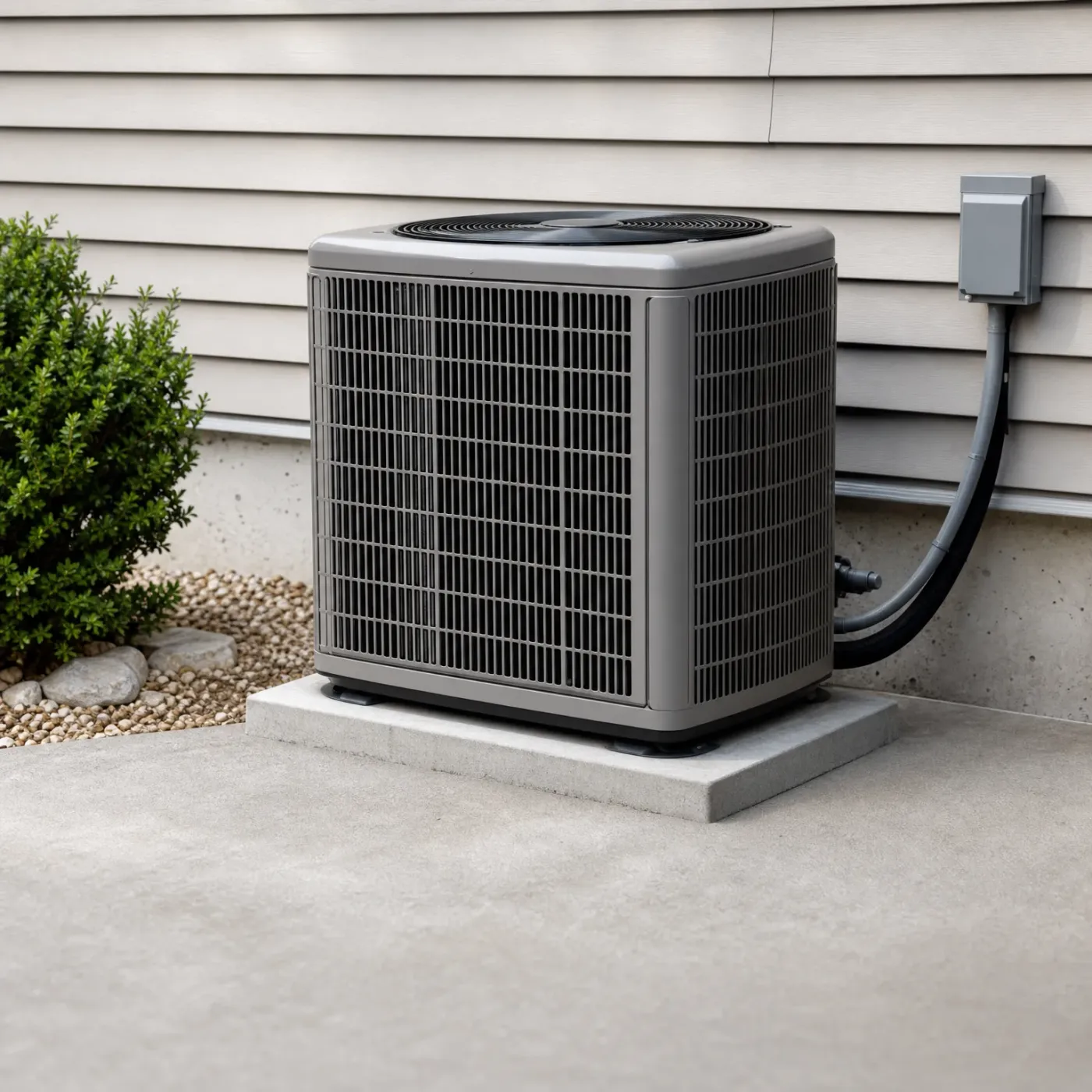
A gray outdoor condenser unit on a concrete pad beside a house with horizontal lap siding, connected by conduit and lines to a wall-mounted disconnect box, with a shrub and gravel bed to the left.
A clean heat pump like this one draws air through an open coil, so dust has nowhere to collect and nothing to burn off.
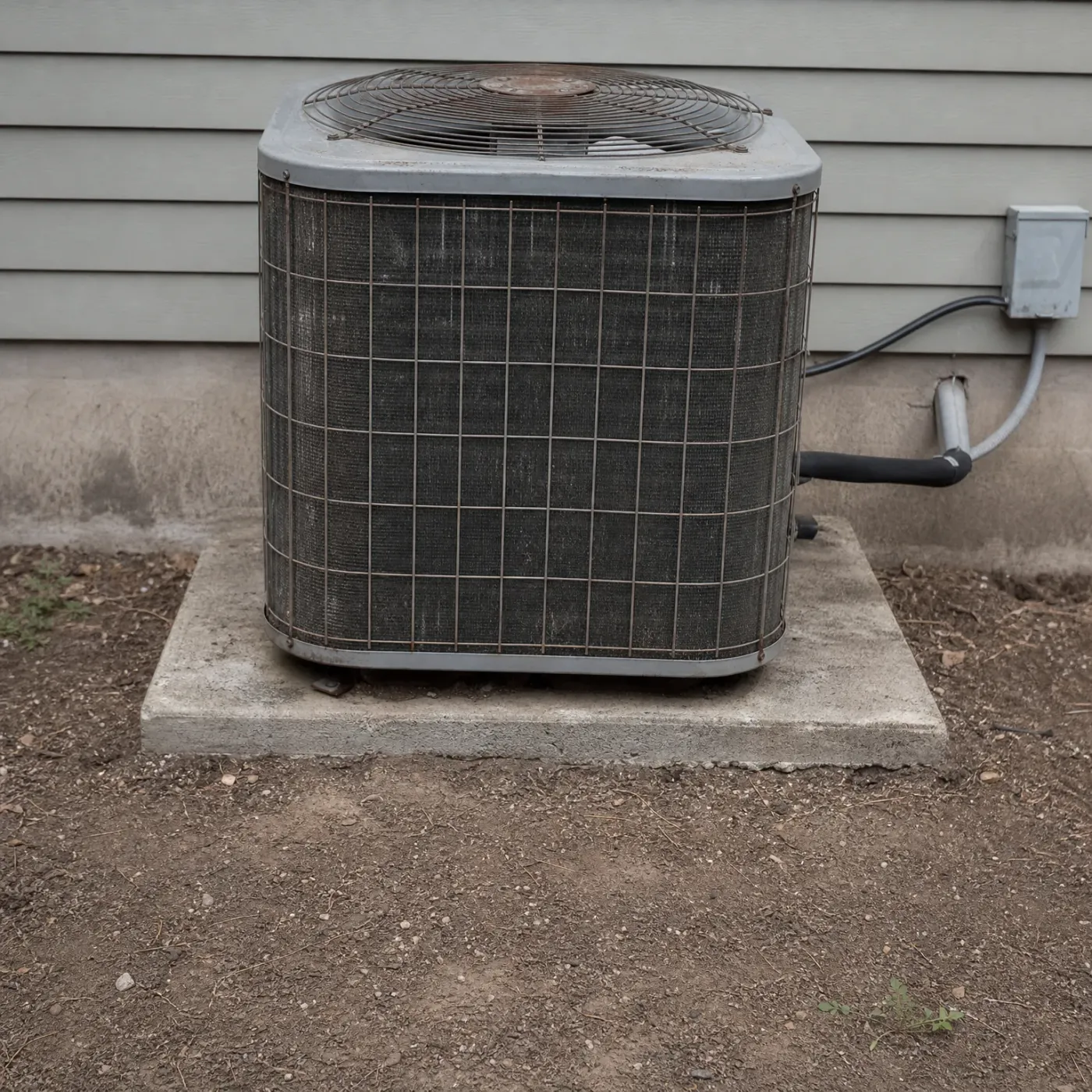
An outdoor air conditioner condenser unit on a concrete pad beside a house with horizontal lap siding, with refrigerant lines and a gray electrical disconnect box on the wall, surrounded by bare dirt.
Caked dirt on the coil and fan grille traps heat where it shouldn't sit, and that's often what you're smelling.
A single-story house with gray vinyl siding, dark shingled gable roofs, and white-trimmed windows, set behind a partly dry green lawn under a clear blue sky.

Florida summers run heavy. Averaged across June, July and August, the dew point here sits around 74°F, the measure of how much moisture is actually in the air, not just the heat. That kind of air makes your heat pump run longer and more often to pull the moisture out of the house. Longer runtimes mean more dust gets pushed across the coil each cycle, and more chances for it to meet heat before it clears. If the burning smell shows up again and again instead of fading after one run, it's often because the system barely gets a break long enough to stay clean on its own. Source: NOAA climate normals for Florida.

NASA POWER T2MDEW county cells weighted by homes

A burning smell that fades is dust. One that sharpens, or comes with a tripped breaker or a dead blower, is a part that needs attention before you run the system again. That's the whole answer. What you need now is someone who can look at your unit and tell you which one you've got, and in a state where heat pumps run most of the house's heat and cooling both, the contractor who shows up knows that equipment because it's what they work on every week, in homes like yours, through summers like this one. You'll be matched with one licensed contractor local to you, not a handful of companies competing for your callback. Send the request and the search is off your plate. Someone who already knows what a Florida summer does to a heat pump takes it from here.

A single-story stucco house at dusk with a lit paver walkway lined by low path lights, desert plants and boulders in front, and distant mountains under an orange and blue sky.

Heat Pump Repair

Done looking for a heat pump pro

Step 1 of 3: Equipment
  • A cream chunky cable-knit throw draped over a beige upholstered armchair beside a bright window, with a wooden side table holding a book and a vase of leafy branches at left.
    • Tell a local repair pro what your heat pump is doing.
    • Say what's going on with your heat pump, and a pro who works on them reaches out.
  • Living room corner with a gray sofa holding beige pillows and a knit throw, a round wooden coffee table with a dark planter and shallow bowl, a jute rug, a floor lamp, a framed landscape print on the wall, and a window showing trees.
    • After this form, you can stop searching for a heat pump pro.
    • One request and the search for a pro is handled.
  • A living room corner with a cream sofa and cushion, knit throw, wooden coffee table holding a shallow bowl and dark ceramic vase with green foliage, a floor lamp, potted plant in a woven basket, and linen curtains at a window.
    • Fill out one short form instead of calling around.
    • Explain the job once and skip repeating it on every call.
  • A round reclaimed-wood coffee table with a black metal base sits on a woven rug in front of a cream sofa with cushions, with a lit built-in fireplace and a tall indoor tree in the background.
    • The pro who reaches out is licensed in Florida.
    • Only one pro gets your request, so you hear from one company.