Why your heat pump runs on emergency heat in Florida

Step 1 of 3: Equipment

Your heat pump switches to emergency heat on its own when it can't pull enough warmth from the outside air, usually during a cold snap, or when something inside the system has failed and the outdoor unit can't run at all. That second case is the one worth your attention. Emergency heat works by electric resistance strips, the same idea as a space heater, and it costs more to run than the heat pump itself. If the switch stays on past a cold night, or you find it's been running that way for days without you touching the thermostat, the heat pump side has likely stopped working, maybe a frozen or failed outdoor unit, a bad defrost control, or a compressor issue. Florida winters rarely demand emergency heat for long, so if yours keeps kicking in, the system is telling you it needs a look before your electric bill shows the difference.

A woman in a knitted shawl sits in a living room with a fireplace, shelves, a sofa with cushions, and a lamp by a bright window, looking off to the side.
A woman with long brown wavy hair in a green shirt over a white top stands in a living room with built-in white shelves, a ceiling fan, a potted plant and a sliding glass door.
A woman with shoulder-length gray-streaked hair in a light gray knit sweater stands smiling and looking off to the side in a living room with a sofa, houseplant, framed picture, and sunlit sliding glass door.
A woman with shoulder-length curly gray hair wearing a gray knit sweater stands near a window with a sheer curtain, looking to the side, with a blurred interior room behind her.

Cold Snap or Broken Unit

Working as designed

  • A cold snap pushes outdoor temperatures low enough that the heat pump can't pull enough warmth from the air, so emergency heat fills the gap for a short stretch.
  • The outdoor unit may still be running fine. Emergency heat is layering extra electric heat on top of it, not replacing it.
  • Once the outside temperature climbs back up, the system should switch back to normal heat pump operation on its own.
  • Your thermostat may have a switch or setting you can toggle for this, separate from the auto switch-over tied to an outdoor unit failure.
  • This kind of switch-over is short-lived. It should resolve within a day or two as the cold snap passes.

Something has failed

  • The outdoor unit has stopped running altogether, whether from a bad compressor, a tripped breaker, a failed capacitor, or a refrigerant leak, and the system has shifted to emergency heat so you aren't left without heat entirely.
  • Emergency heat uses electric resistance heat strips instead of the heat pump cycle, and it will raise your power bill the longer it stays on.
  • This switch happens on its own and stays on. It won't revert back once the weather warms up, because the outdoor unit still isn't working.
  • A system stuck on emergency heat for more than a day or two, regardless of outdoor temperature, points to a fault with the outdoor unit rather than the cold.
  • A technician who works on heat pumps in Florida year-round will know which of these failures shows up most often and can check the outdoor unit directly.
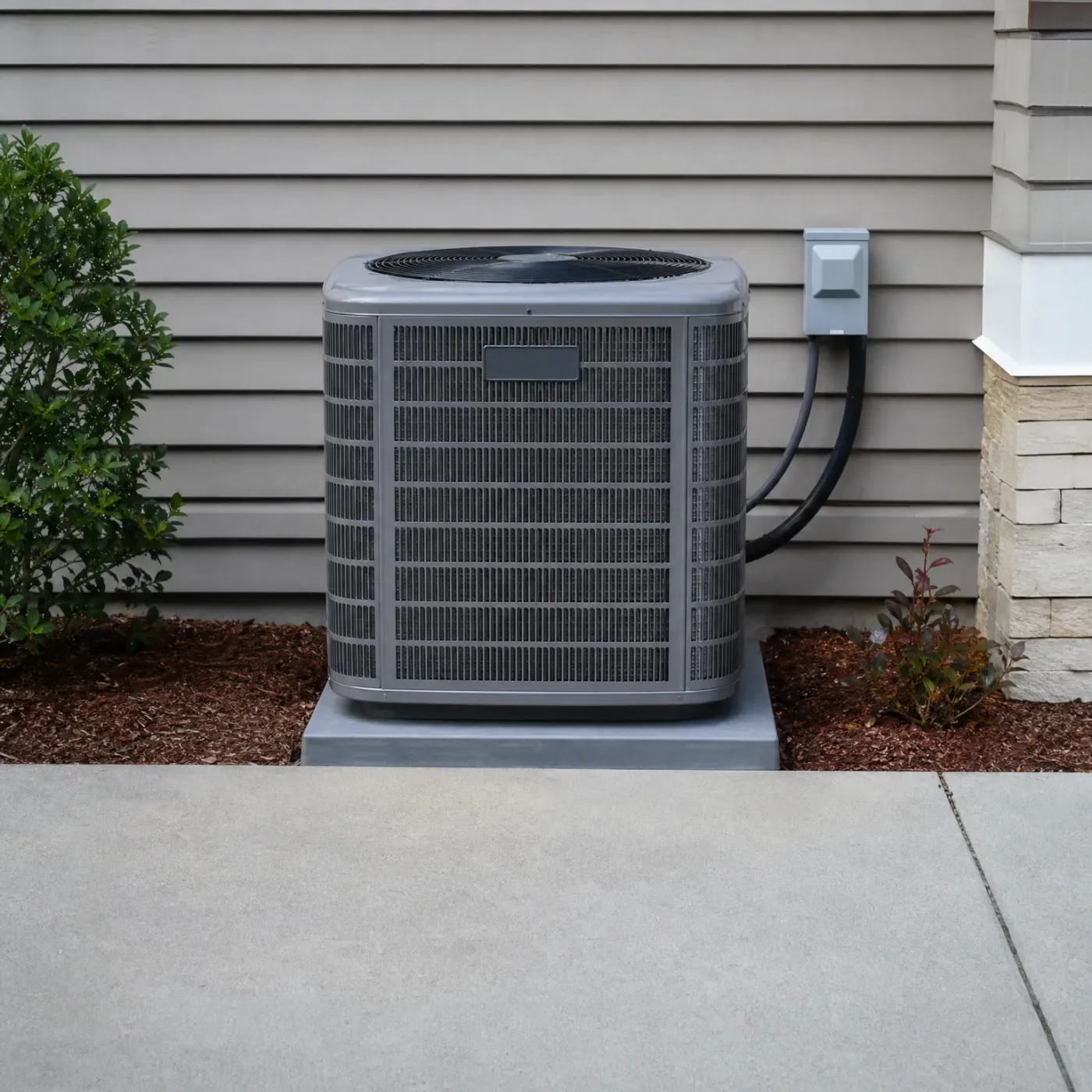
A gray outdoor condenser unit sits on a concrete pad beside a house with horizontal lap siding, with a wall-mounted disconnect box and refrigerant lines, mulched beds and a shrub nearby, and a concrete walkway in the foreground.

Running as it should

The outdoor unit sits quiet on its pad, cycling on and off the way it's built to. Air moves through it and the disconnect box stays dark. Nothing about it needs attention, and emergency heat stepping in during a cold snap doesn't mean otherwise.

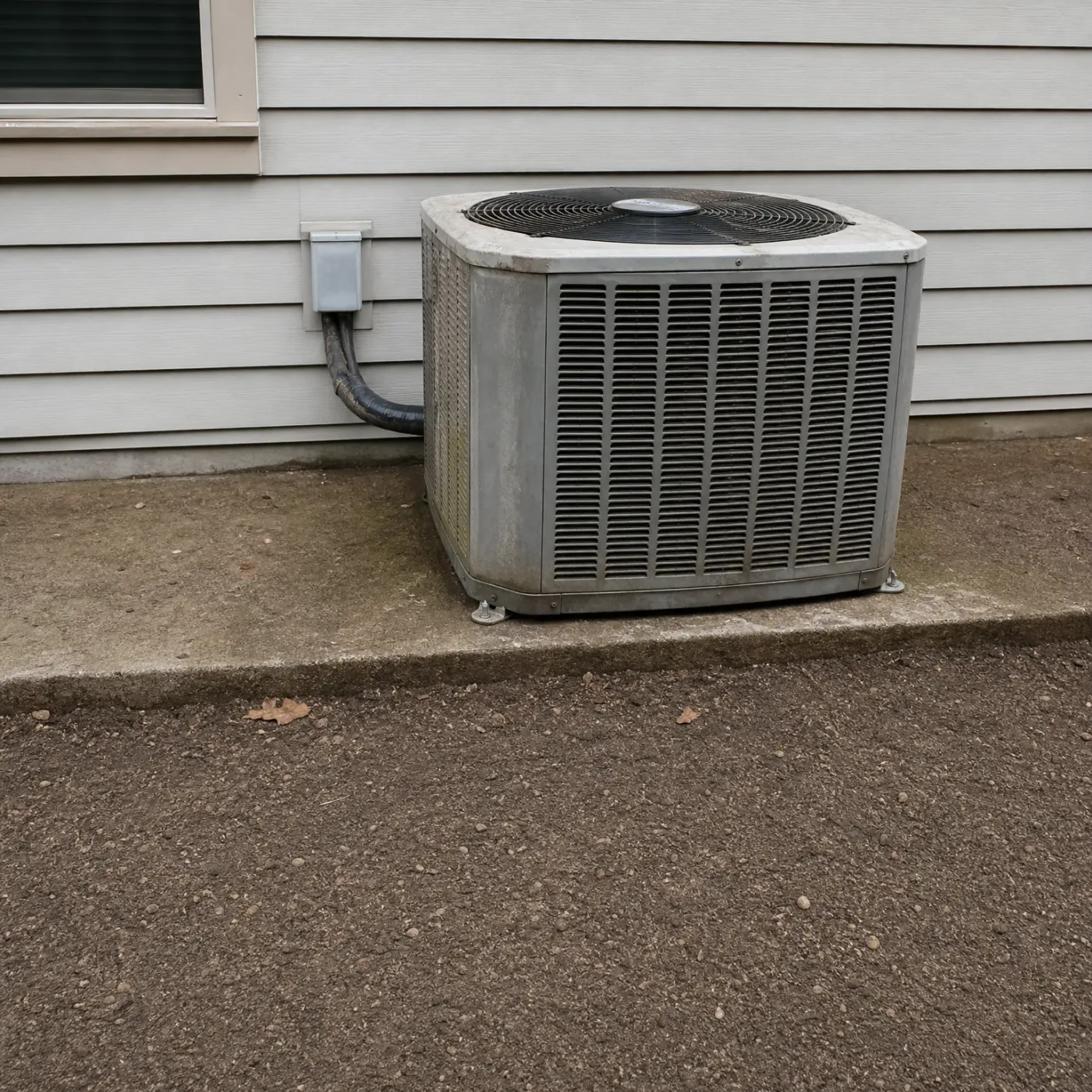
An outdoor air conditioner condenser unit on a concrete pad beside a light gray vinyl-sided house, with an electrical disconnect box and conduit on the wall and bare soil in the foreground.

Stuck in emergency heat

The outdoor unit sits idle no matter how cold it gets outside. Refrigerant lines run to it, but the compressor inside never kicks on. Your house stays warm on electric strip heat alone, and the furnace or heat pump bill shows it.

What are you noticing at home right now

Look at the thermostat. If it says "emergency heat" or "aux heat" and won't clear even after a day or two of mild weather, the outdoor unit likely isn't running at all. Walk outside and check the unit itself. If the fan isn't turning and you don't feel any air moving through it, that's a sign it's shut down rather than just struggling in the cold. Inside, you may notice the air feels warm but the heat doesn't let up the way it used to, or your power bill has climbed because electric strip heat is carrying the whole load. Left alone, that strip heat keeps running and the cost keeps adding up until the outdoor unit gets looked at.

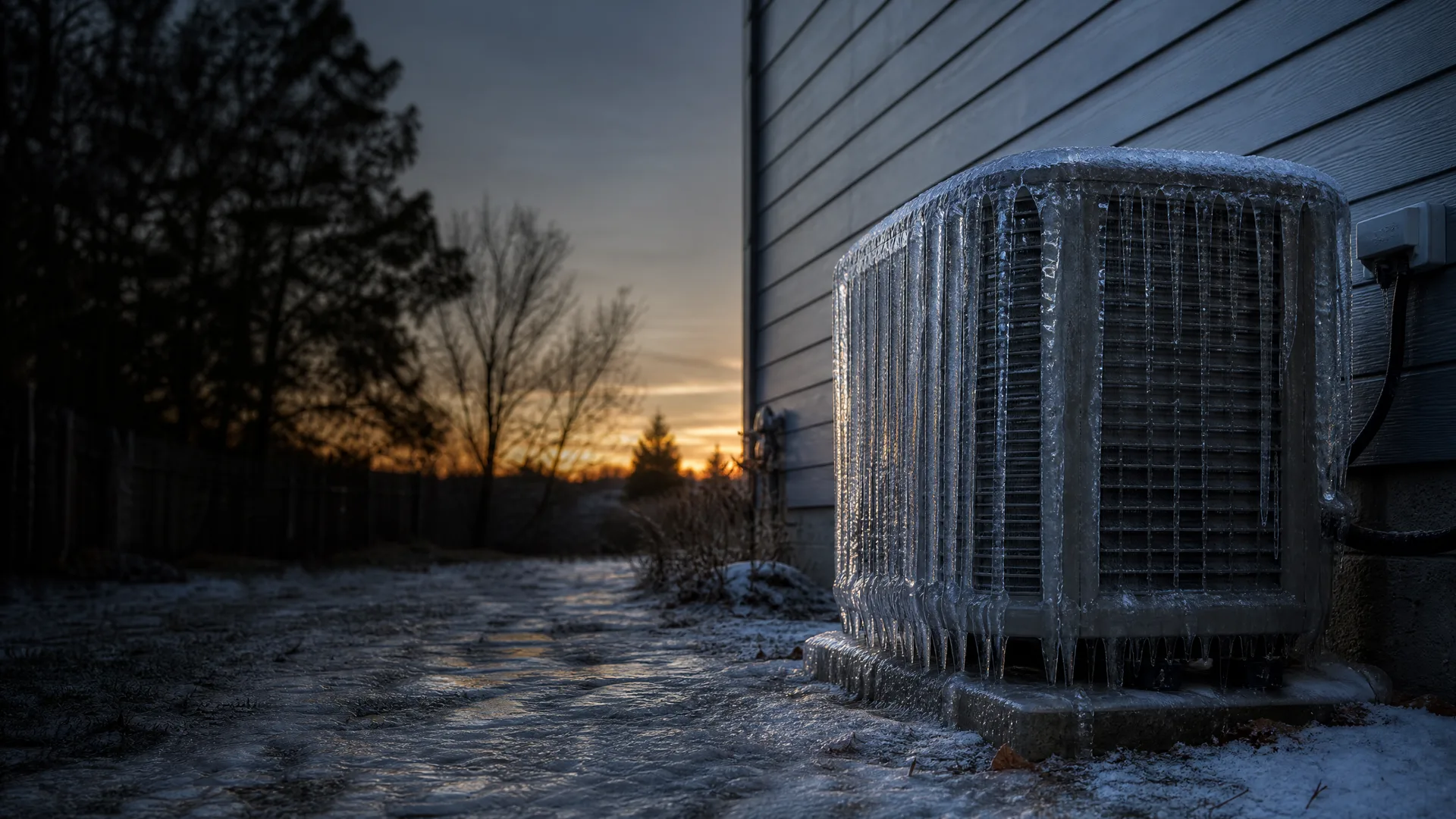
An outdoor condenser unit beside a horizontally sided house, encased in thick ice with hanging icicles, on a snow-dusted ground at sunset with bare trees in the background.

You're up before the sun, same as every morning this week, filling the coffee maker while the kitchen window is still black. Out past the carport, the side yard light catches the outdoor unit, and you stop. Ice is wrapped clean around the cabinet, thick over the coils, a crust of it on the ground beneath where it's dripped and frozen again overnight. The unit isn't humming. No fan turning, no air moving through it. Inside, the house is warm enough, the thermostat reading what you set it to, but the little display has said "emergency heat" since Tuesday. You stand at the glass door a minute with your coffee, looking at the ice, before you go fill out the form.

Finding a pro stops being your job

The pro who reaches out is licensed in Florida.

No charge to send it. You decide if you hire them.

Why emergency heat costs more to run

Emergency heat in a Florida home almost always means electric resistance heat, strips mounted in the air handler that warm the air directly instead of moving heat the way the outdoor unit does. Resistance heat uses more electricity to produce the same warmth. A heat pump moves existing heat from outside air, which takes less power. When the system is stuck on emergency heat for days instead of cycling through it during one cold snap, that difference shows up on the power bill, since power here runs at a typical rate but the strips are drawing steadily the whole time.

The outdoor unit is the one working

Everything that makes a heat pump efficient happens outside, at the compressor and the fan. When that unit won't run, the system has no choice but to lean on the strips full time, and nothing about comfort tells you which case you're in. A house can feel exactly as warm whether the outdoor unit is pulling its share or sitting dead. That's why the thermostat reading matters more than how the rooms feel. A contractor checking the outdoor unit can tell within minutes whether it's a control board, a capacitor, or something simpler keeping it from starting.

A woman with her hair in a bun holds a sleeping young child against her chest, both wrapped in a textured beige knit blanket on a sofa in a dimly lit room with a lamp, framed picture, and bookshelf behind them.
A gray-haired woman in a cream knit sweater stands in a dimly lit kitchen at night, looking to her right, with a round loaf of bread in the foreground and a dark window and potted plant behind her.
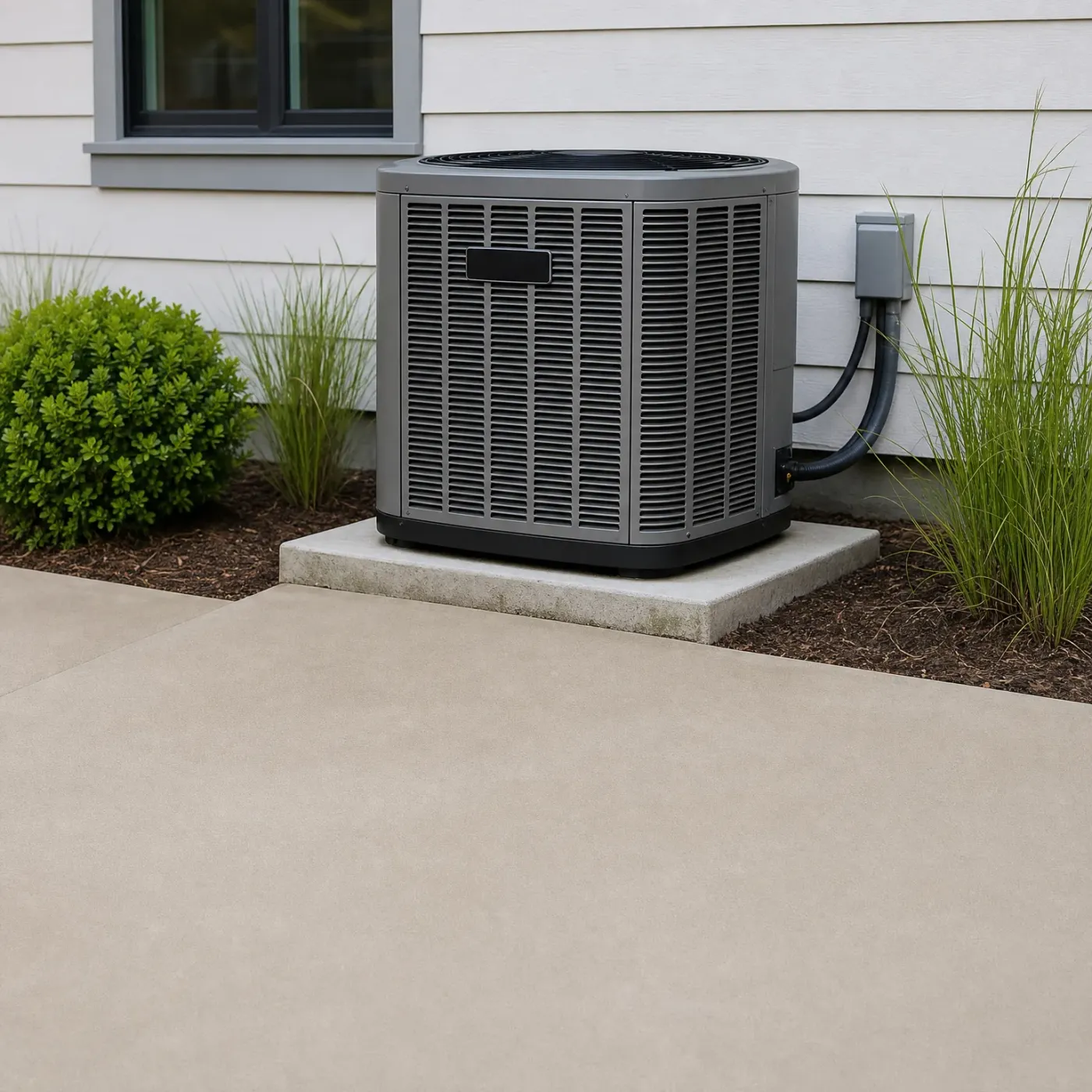
A gray outdoor condenser unit on a concrete pad beside a light-colored horizontal-siding house, with a disconnect box and refrigerant line on the wall, ornamental grasses and a shrub in mulch nearby, and a concrete patio in the foreground.

The unit sitting normal

The condenser sits on its pad against the siding, grasses and a low shrub planted around it. The lines run clean to the disconnect box on the wall. It cycles on and off through the day without you noticing, which is how you know it's doing its job.

An outdoor condenser unit sits on a concrete pad beside a house with horizontal vinyl siding, with a gray electrical disconnect box and conduit on the wall and a shrub at left.

The unit that needs a look

Same pad, same wall, same disconnect box, but the unit isn't running. No hum, no air moving past the cabinet. If the thermostat has been stuck on emergency heat while this sits quiet, the outdoor unit is the part a contractor needs to check first.

Power costs 15.21 cents per kilowatt-hour statewide

Emergency heat runs on electric resistance strips, which pull a lot more power than the outdoor unit moving heat the normal way. At 15.21 cents a kilowatt-hour, a system stuck on emergency heat for days shows up clearly on your next bill, not just in how the house feels.

EIA-861 2025 statewide residential average

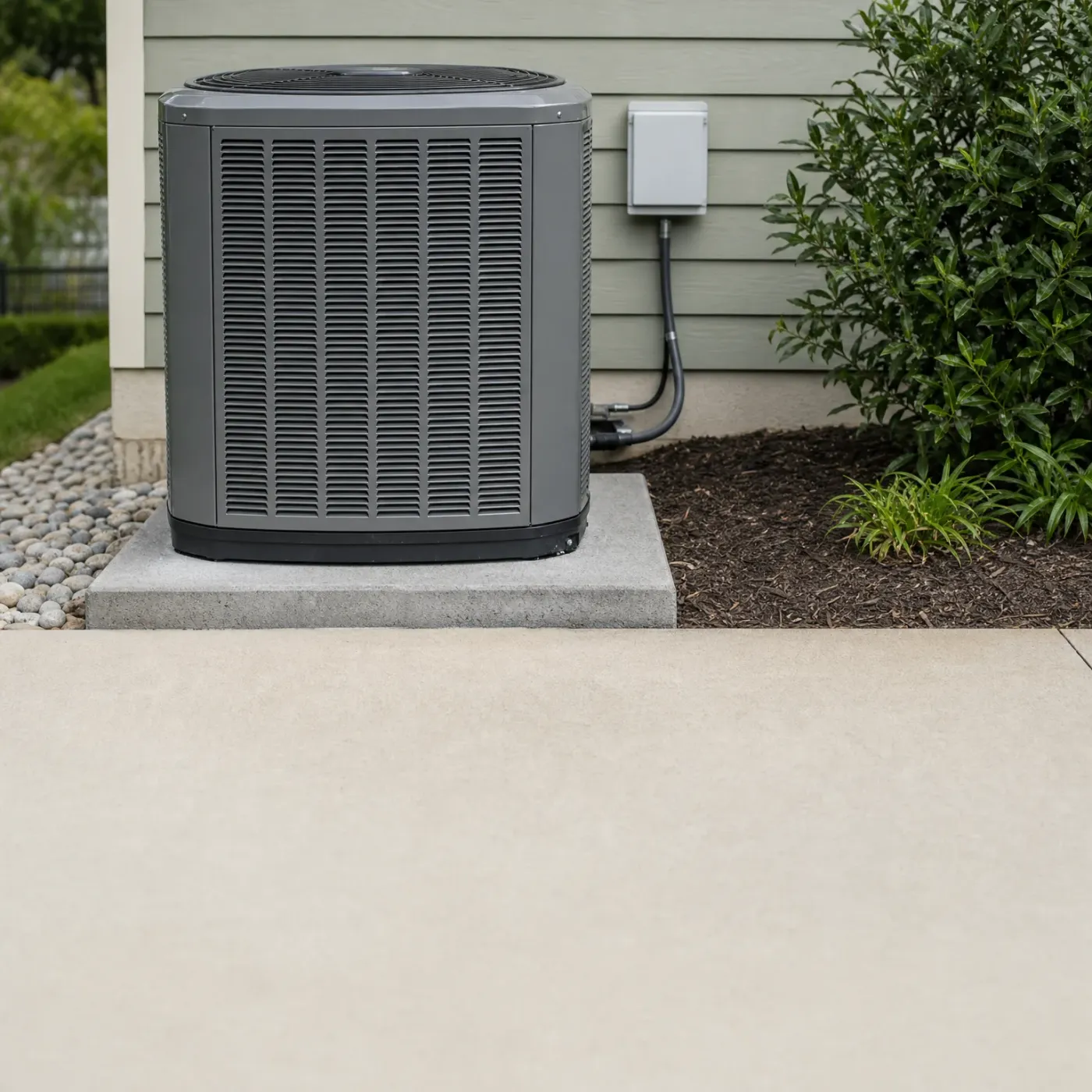
A gray outdoor condenser unit on a concrete pad beside a light green lap-sided house, with a wall-mounted electrical disconnect box, mulch bed with shrubs, river rock, and a paved walkway in the foreground.
The condenser sits clean on its pad, coils clear, running its normal cycle to keep the house warm.
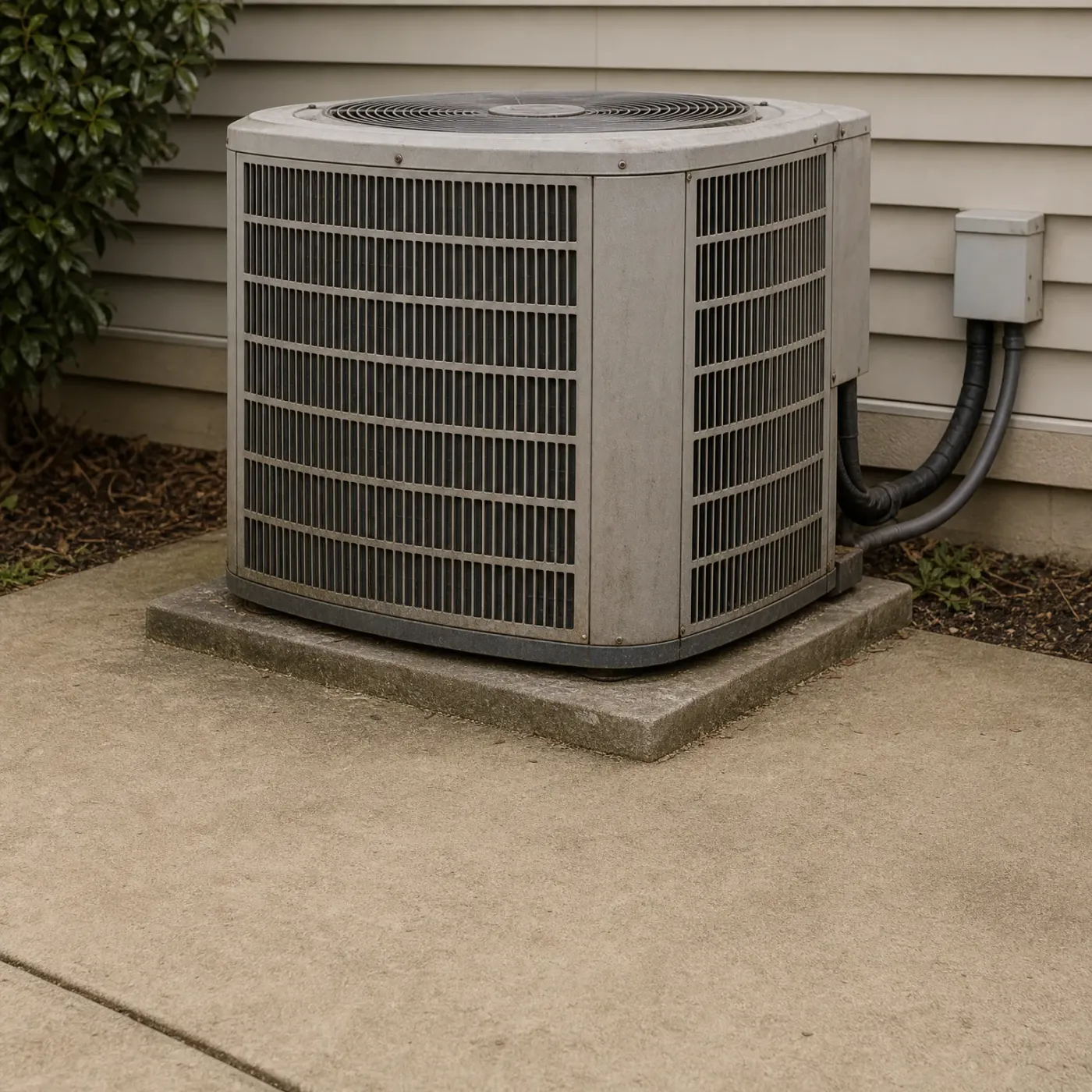
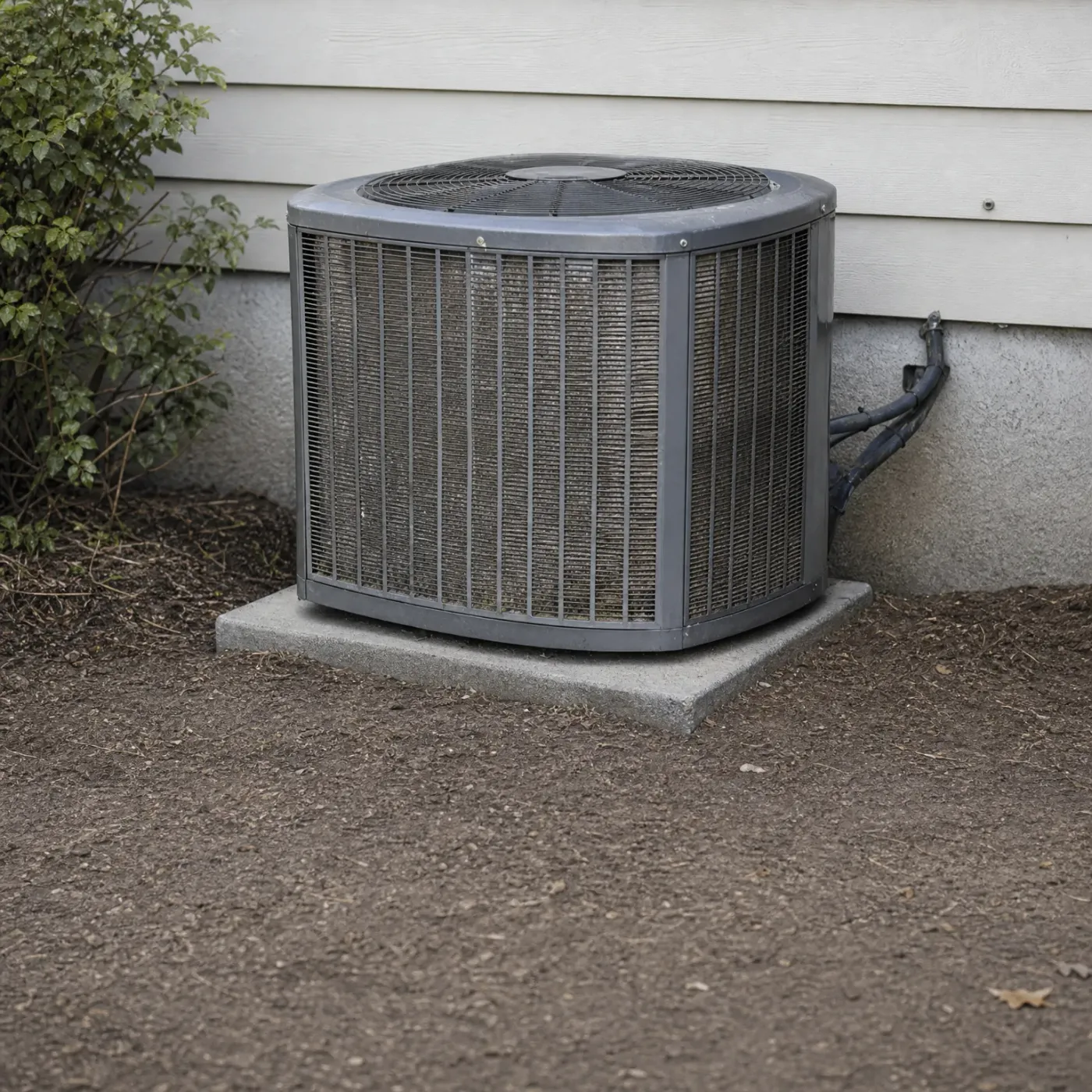
An outdoor air conditioner condenser unit on a concrete pad beside a house with horizontal lap siding, with refrigerant lines entering the wall and a shrub on bare soil to the left.
Coils caked with dirt and debris choke airflow, and the unit can't move enough heat to keep up.

Where this leaves you

  • Emergency heat that clears on its own once a cold snap passes is the heat pump working the way it's built to.
  • Emergency heat that stays on through mild weather points to a failed part in the outdoor unit, not the weather.
  • A frozen or iced-over outdoor unit, or one that sits silent with the disconnect box dark, needs a licensed technician before the switch gets flipped back.
  • A local contractor who services heat pumps all winter knows which parts in your area tend to fail first and checks those before anything else.
  • Sending one request means one contractor calling you back, not a string of companies competing for the job.
  • The longer a system runs on resistance strips instead of the outdoor unit, the more it shows up on your next bill.

A heat pump stuck on emergency heat is either waiting out a cold snap or waiting on a repair. The thermostat and the outdoor unit together tell you which. If the display clears once the weather warms up, nothing was wrong. If it doesn't, something in the outdoor unit failed and the system switched over on its own to keep your house warm while it waits for someone to fix the actual problem.

That's the part worth acting on. A frozen coil, a dark disconnect box, a unit that sits silent when it should be cycling, none of that fixes itself, and every day it runs on resistance strips instead of the outdoor unit is a day your bill reflects it.

A technician who works on heat pumps in Florida homes all winter has likely seen your exact failure before. These systems don't see the demands they'd face farther north, so the parts that give out here tend to be the same ones, and someone local who works on this equipment every season knows where to look first.

Send one request and one licensed contractor in your area calls you back about it. Not three or four companies working the same lead, just the one who's going to look at your unit. That's what moves this from a thermostat you're watching to a system someone's actually looking at.

Sunlit corner of a room with a wooden sideboard holding a ceramic vase of olive branches and a dark wooden bowl, beside a white-framed window, a hardwood floor and woven rug.
A wooden cabinet holding a pale ceramic vase with leafy branches stands beside a beige wall in a sunlit room with hardwood floors, a jute rug, and a window showing green foliage outside.
Sunlit room corner with a beige upholstered sofa holding a rust-brown cushion, beside floor-length linen curtains at a window, over a wood floor with a woven rug.
Corner of a room with beige walls, a framed photograph, a floor-length linen curtain beside a window, an upholstered armchair with a knit pillow, white baseboards and trim, wood flooring and a pale rug.
Sunlit living room corner with a beige upholstered armchair with a cushion, linen curtains beside a wooden-framed window, green vertical panelled wall with a framed print, and a wooden table edge over a woven rug.

Let someone else find the pro

Only one pro gets your request, so you hear from one company.

Hand it over

There's no charge for the request.