Why your heat pump is blowing lukewarm air in Florida
Fill out one short form instead of calling around.
A heat pump blowing air that feels room temperature instead of cold, in a Florida summer, usually means it is running but not actually cooling. That is different from a system that is short cycling or not turning on at all, and it points to a smaller set of causes: low refrigerant, a dirty outdoor coil, a failing reversing valve, or ice built up on the coil that is melting and pushing warm, damp air through the vents.
Some of this you can rule out yourself. Check the outdoor unit for a coil packed with grass clippings or leaves. Check that the air filter inside isn't choked. If either one looks fine and the air is still lukewarm, the problem is inside the system, and that calls for someone who can gauge the refrigerant charge and check the reversing valve.
That's usually where the search starts: looking up HVAC companies, calling a few, describing the same symptoms each time, waiting on callbacks, then trying to compare quotes from people you've never worked with. None of that gets your house any cooler. It just delays the part where someone actually looks at the unit.
Request service here and that part is handled. You're connected with one licensed contractor local to your area, not a handful of companies competing for the job, so you're not fielding multiple calls about the same problem. Someone who works on heat pumps all summer in this climate has likely already seen what's wrong with yours. Reversing valves stick, coils ice over, refrigerant leaks slowly over a season. They know the order to check things in and what tends to fail first on units that run as hard as they do here.
Fill out the request, describe what you're noticing, and the next call you get is from someone ready to look at the actual unit.
Lukewarm air from a heat pump usually means the system is stuck between modes or losing refrigerant. In cooling mode, a low refrigerant charge is the most common cause. The coil can't pull enough heat out of the air, so what comes through the vents feels close to room temperature instead of cold. A failing reversing valve causes the same symptom a different way: it controls whether the system runs in heating or cooling, and when it sticks partway, the unit blows air that is neither hot nor properly cold. Outside, a condenser coil caked with dirt or grass clippings keeps the system from shedding heat the way it needs to, which has the same effect on the air coming out inside. In Florida's heat, a heat pump that isn't cooling properly has to run far longer to get anywhere close to your setpoint, which shows up on your power bill before you even notice the air isn't cold. A technician can tell which of these it is by checking refrigerant pressure and the reversing valve directly.
A heat pump moves heat instead of making it, so it depends on refrigerant pressure to do that job. When the charge is low, the outdoor coil can't absorb enough heat and the indoor coil can't release enough, no matter how long the system runs.
That's why a unit can run nonstop in July and still only put out air that feels room temperature. The fix isn't to let it run longer. It's to find where the refrigerant is leaving the system and restore the charge to what the equipment needs.
Power costs 15.21 cents per kilowatt-hour statewide
At 15.21 cents a kilowatt-hour, a heat pump that runs all day without actually cooling is money spent for nothing. If yours has been running constantly to chase a temperature it never hits, that shows up on the bill before anyone tells you what's wrong with the unit.
EIA-861 2025 statewide residential average
What's Actually Going Wrong Inside
A reversing valve stuck between heating and cooling positions can send both warm and cool refrigerant through the same coil at once.
The reversing valve is controlled by a small solenoid, and if that solenoid fails, the valve can hang halfway and mix the two cycles.
A failing compressor can still run and make noise without building enough pressure difference to move heat effectively.
Ice on the outdoor coil blocks airflow and stops the coil from absorbing heat, even while the indoor fan keeps blowing.
A dirty outdoor coil caked with dirt or grass clippings loses contact with outside air the same way ice does.
Low airflow from a clogged filter or blocked return can keep the indoor coil too cold to pull heat properly, which shows up as weak or lukewarm air instead of a clean shutdown.
A heat pump has one job in summer: move heat from inside your house to the air outside. It does that by switching a reversing valve into cooling position and running refrigerant through two coils, one indoors, one out. When the air coming through your vents is lukewarm instead of cold, something in that chain is failing partway, not all the way.
The reversing valve is a common culprit. It's switched by a small solenoid, and if that solenoid loses power or sticks, the valve can land between positions. Refrigerant from both cycles ends up moving through the same coil, canceling out the temperature drop you'd normally feel.
The compressor is worth ruling out too. It can keep running, keep making its usual sound, and still not build the pressure difference the system needs to move heat. From the living room, that looks identical to a valve problem. Only testing the pressures tells them apart.
Airflow problems cause the same symptom for a different reason. Ice on the outdoor coil, dirt caked across its fins, or a filter clogged enough to choke the return air all stop the coil from doing its job, even though the fan keeps moving air past it. A local contractor who services this equipment every summer knows which of these to check first and in what order, rather than replacing parts one at a time to see what fixes it.
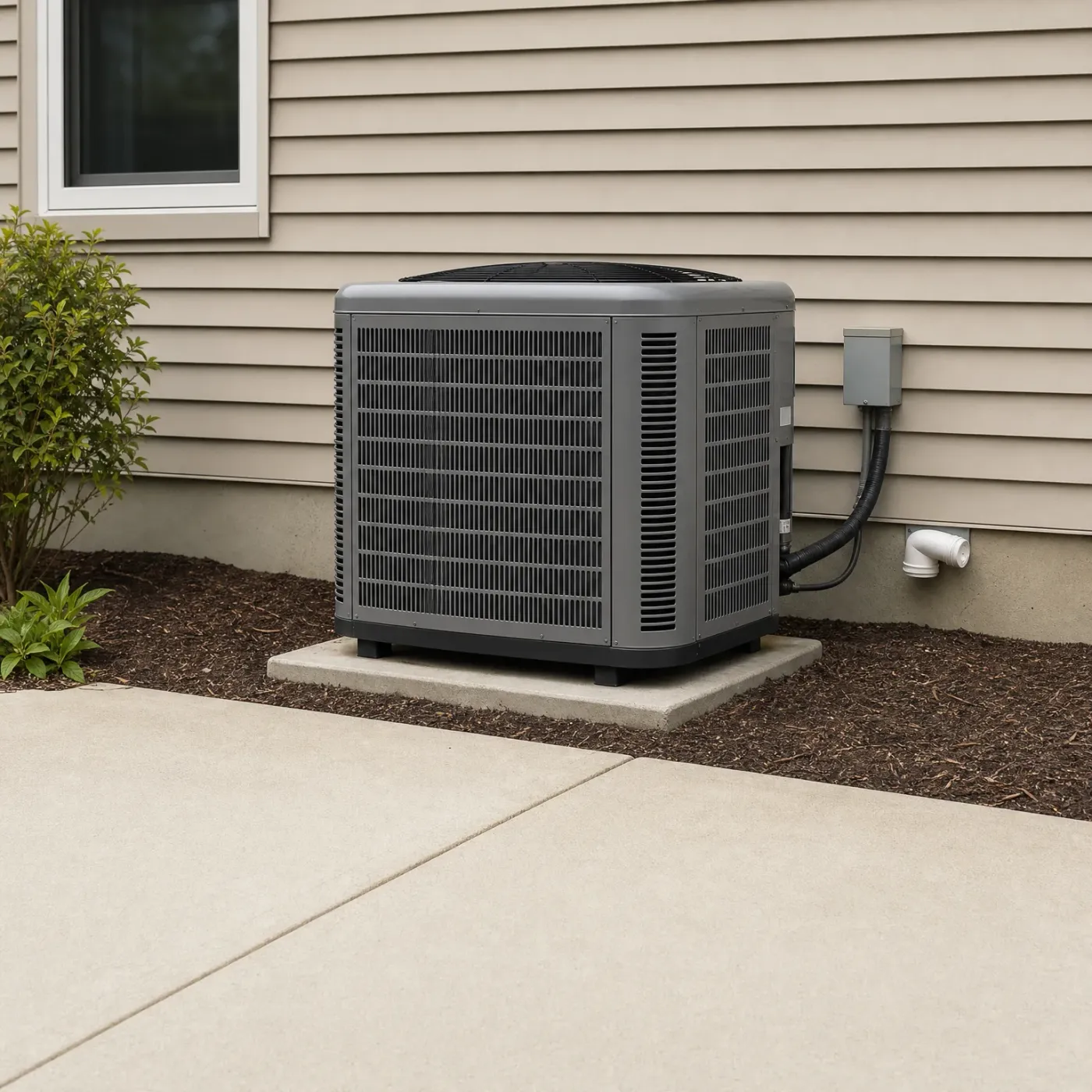
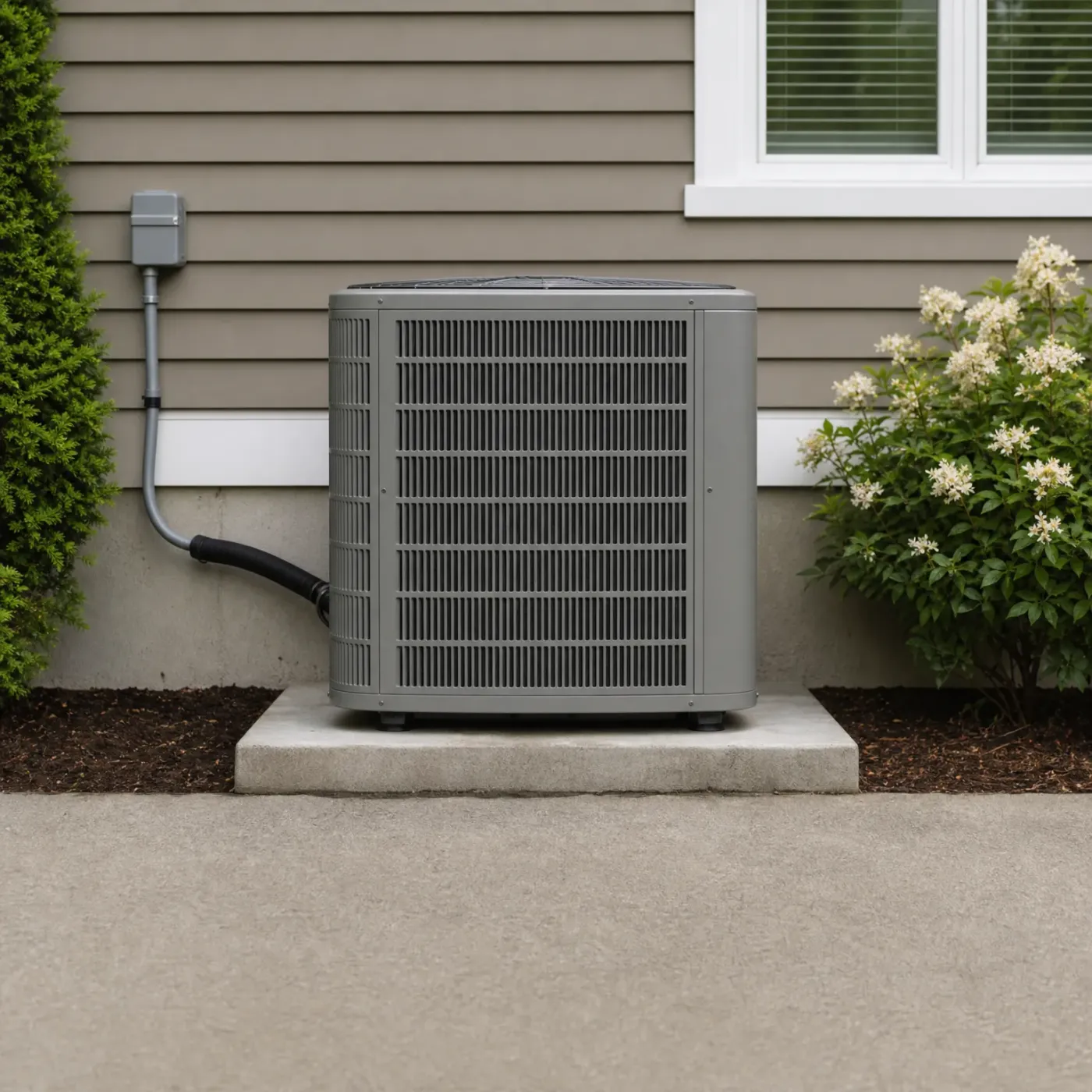
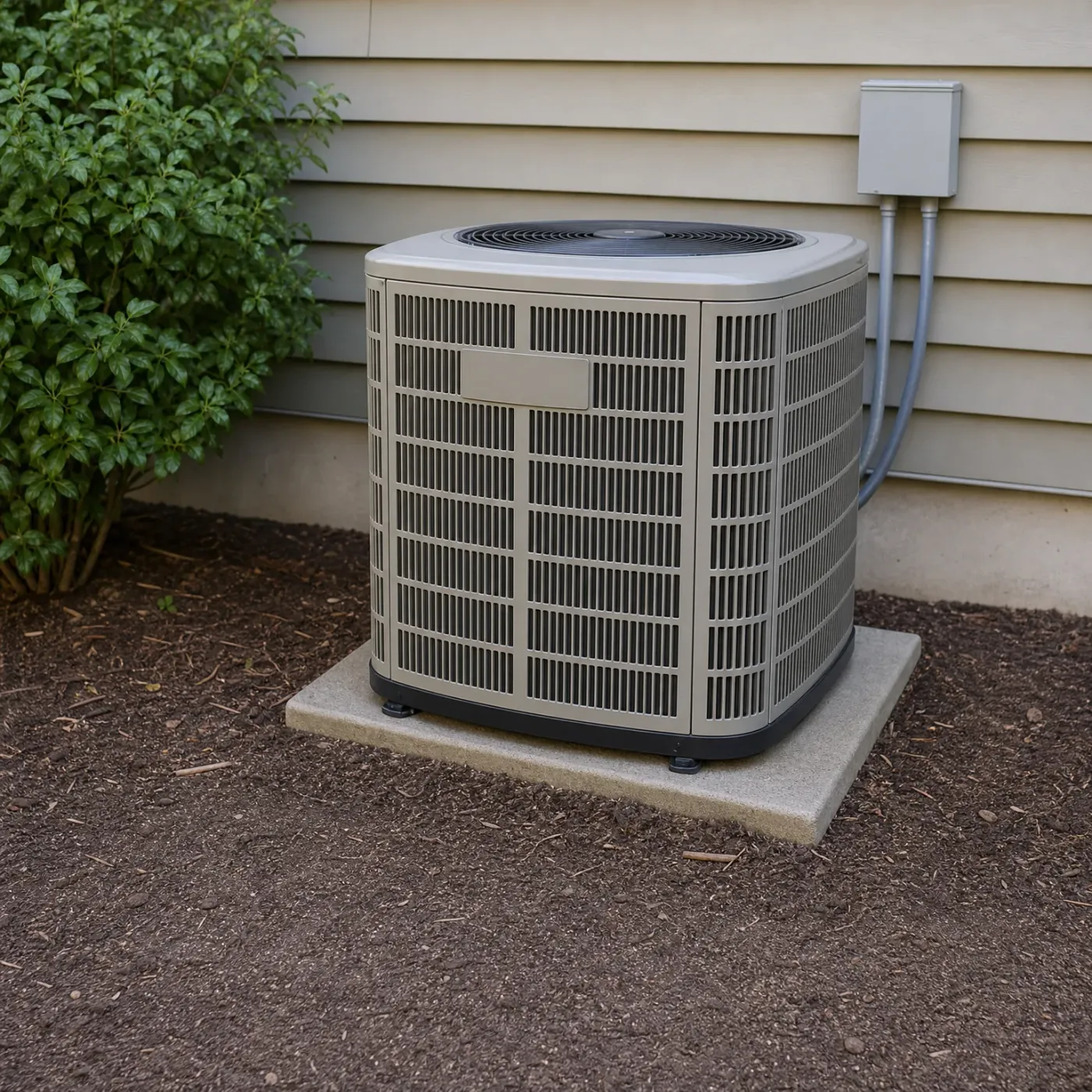
A unit like this, kept clear of debris and running on a full charge, cools the way it's supposed to.
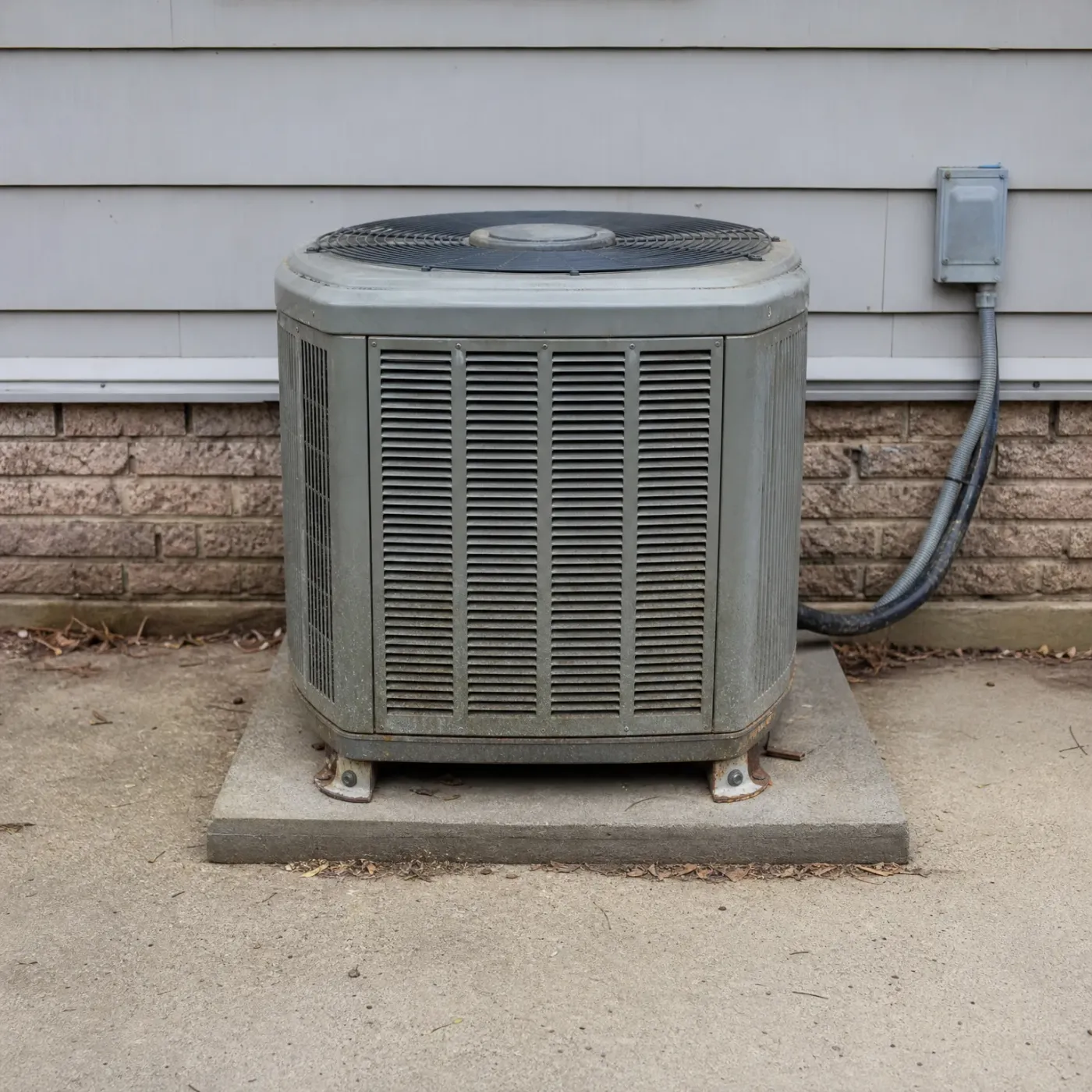
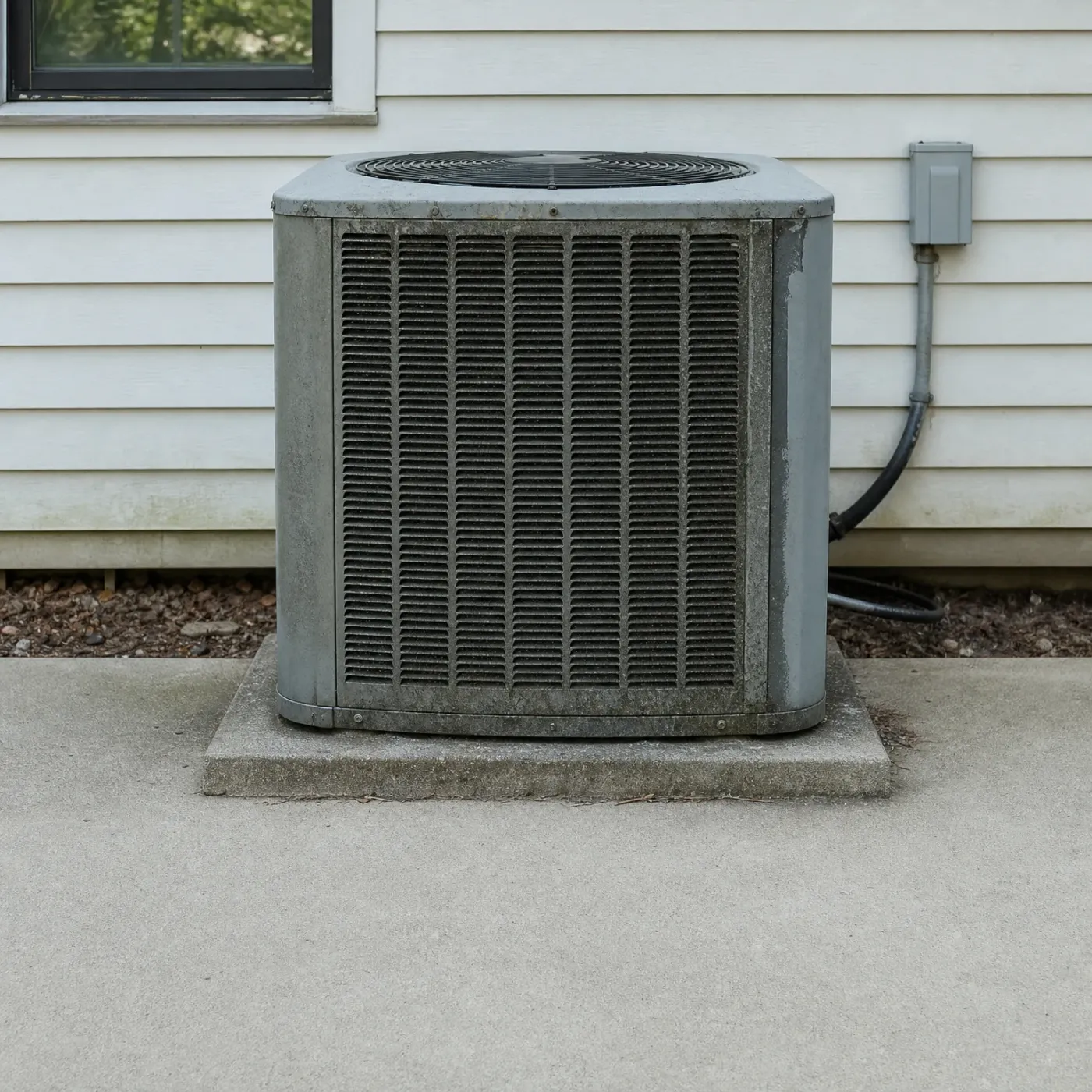
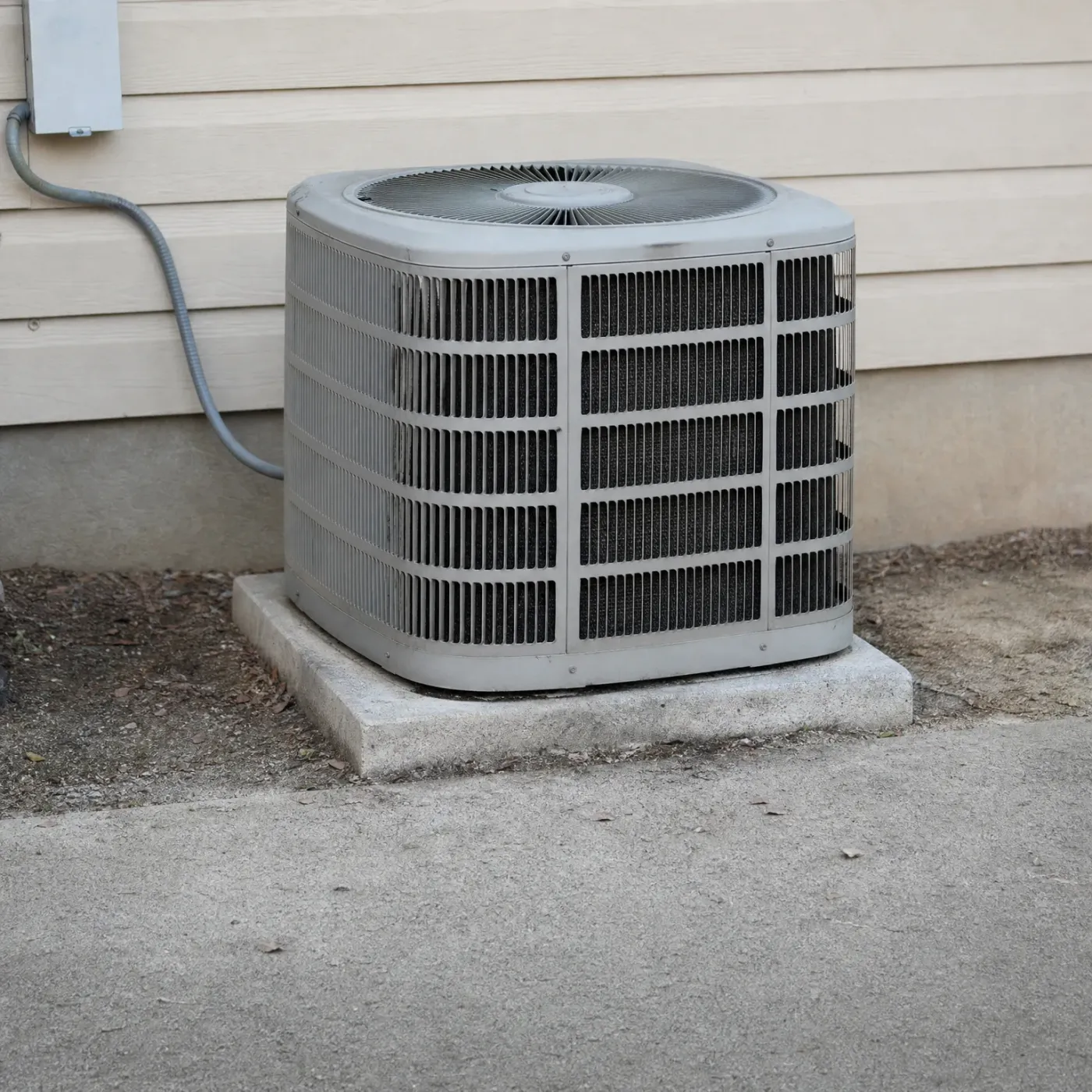
Years of dust and weather on the coil and cabinet make it harder for the unit to pull heat out of the air.
What are you noticing around the house right now
You've probably caught yourself standing under a vent trying to decide if it's actually blowing cold or just moving air. The thermostat might say 72 while the room sits closer to 78. You run the system longer, maybe drop the setpoint a few degrees, and it still doesn't catch up. Some rooms feel worse than others, especially ones farther from the air handler. You might notice ice on the outdoor unit's coil or lines, even though it's summer outside. If this has been going on for a while, humidity indoors tends to climb along with it, since a system that isn't cooling properly also isn't pulling moisture out of the air. Left alone, it's wasted power now and more strain on the compressor over time.
1
Thermostat calls for cooling and the compressor starts running
2
Refrigerant should absorb heat at the indoor coil and cool it
3
A low charge or stuck valve keeps the coil from pulling heat out
4
Warm refrigerant passes through instead of returning cold to the vents
Your request goes to one pro, not a list of companies.
You only hire the pro if you want to.
A repair call fixes this
A low charge gets found with gauges, not guesswork, and a contractor who works on heat pumps all summer knows to check the reversing valve before anything else. If there's a leak, it gets found and sealed, not just topped off. A stuck valve gets freed or replaced outright. Once the system is actually moving refrigerant the way it's built to, the coil does its job again and the air coming through the vents drops to where the thermostat says it should be. One visit, one diagnosis, and you know what was actually wrong instead of guessing at it all summer.
Waiting it out costs more
A heat pump running on a low charge keeps running the same way until someone fixes it. It won't correct itself, and the compressor keeps working harder against pressures it wasn't built to handle, which shortens its life. A small leak stays small for a while, then it doesn't. Meanwhile the unit runs longer trying to reach a temperature it can't hit, and that shows up on the electric bill every month it goes unaddressed. The problem doesn't go away on its own, it just gets more expensive and harder on the equipment the longer it sits.
Before you get your heat pump repairAfter you get your heat pump repair
Running the way it should
This unit cycles on, runs its course, and shuts off, and the air at the vent is cold the whole time. The coil stays clean enough to pull heat out of the air, and the charge is where it needs to be. Nothing about it demands a second look.
Running but not cooling
This one turns on the same as always, the fan moves air, and the compressor sounds no different. But the charge is low or the valve is stuck, so the coil never pulls the heat out. It runs and runs, and the house never catches up.
Can I just add refrigerant to fix it myself?
Can I just add refrigerant to fix it myself?
No. Refrigerant work is licensed, and topping it off doesn't fix a leak
Refrigerant isn't something you buy at a hardware store and pour in. Handling it legally requires an EPA certification, and the amount a system needs has to match the manufacturer's spec exactly, checked with gauges while the unit runs. Add too much or too little and the compressor can take the damage, not just the comfort in the room. Low charge almost always means a leak somewhere in the lines or coil, and adding more refrigerant without finding it just buys you another lukewarm summer a few weeks later. A contractor who works on these systems checks the charge against the spec, finds where it's escaping, and seals that before closing the system back up.
Florida summers run heavy, and the number behind that is a dew point averaging 74°F across June, July and August, based on NOAA climate data for where homes sit in the state. Air that wet carries a lot of moisture for a heat pump's indoor coil to wring out before it can even start cooling the air itself. When the charge is low or the valve is stuck, that moisture load doesn't get handled either, so the air coming through the vents feels not just lukewarm but damp and heavy, the kind of air that sits on your skin instead of cooling it.
NASA POWER T2MDEW county cells weighted by homes
Lukewarm air means something specific is wrong, not everything
A heat pump blowing warm air in a Florida summer almost always comes down to a low refrigerant charge, a reversing valve stuck between modes, or a coil too dirty to pull heat out of the air. Gauges and a proper inspection tell you which one you're dealing with. Guessing doesn't, and neither does waiting another week while the unit runs without actually cooling anything.
You don't have to figure out who's qualified to look at this. Instead of searching through listings, calling a few companies, and explaining the same symptoms over and over to get quotes you then have to compare, you get matched with one licensed contractor local to you who works on heat pumps all summer and knows what tends to fail first in this climate. One call, one visit, one person who already knows what questions to ask when they get there.