

Why your heat pump fan won't spin in Florida
Send the request today and stop worrying about who to call.
Hand it offA heat pump fan that won't spin outside usually means the outdoor unit isn't getting power, or the motor itself has failed. Check the breaker first. Florida heat and humidity are hard on outdoor fan motors, and the bearings or windings wear out faster here than in drier climates, especially on units that have run through several summers of muggy, salt-heavy air. A failed capacitor is another common cause. It's the part that gives the motor its initial push, and once it weakens, the motor hums but never turns, or doesn't try at all. If the fan stays still while the system runs, the compressor can overheat trying to cool itself without airflow over the coil, so this isn't something to wait out. With most homes here running on electric heat, a heat pump that isn't moving air outside affects warmth inside too, not just the Florida summer cooling it's known for.

It's past eleven and the room is still warm. You kicked the sheets off an hour ago and they're damp where you were lying. The window glass has fogged up at the edges from the humidity pressing in against the AC inside. You get up and put a hand on the vent and the air coming out is barely cooler than the room itself. Outside you can hear it, or you can't, the usual low hum from the unit by the fence is gone quiet. You stand there in the dark a second, listening for the fan to kick on, and it doesn't.
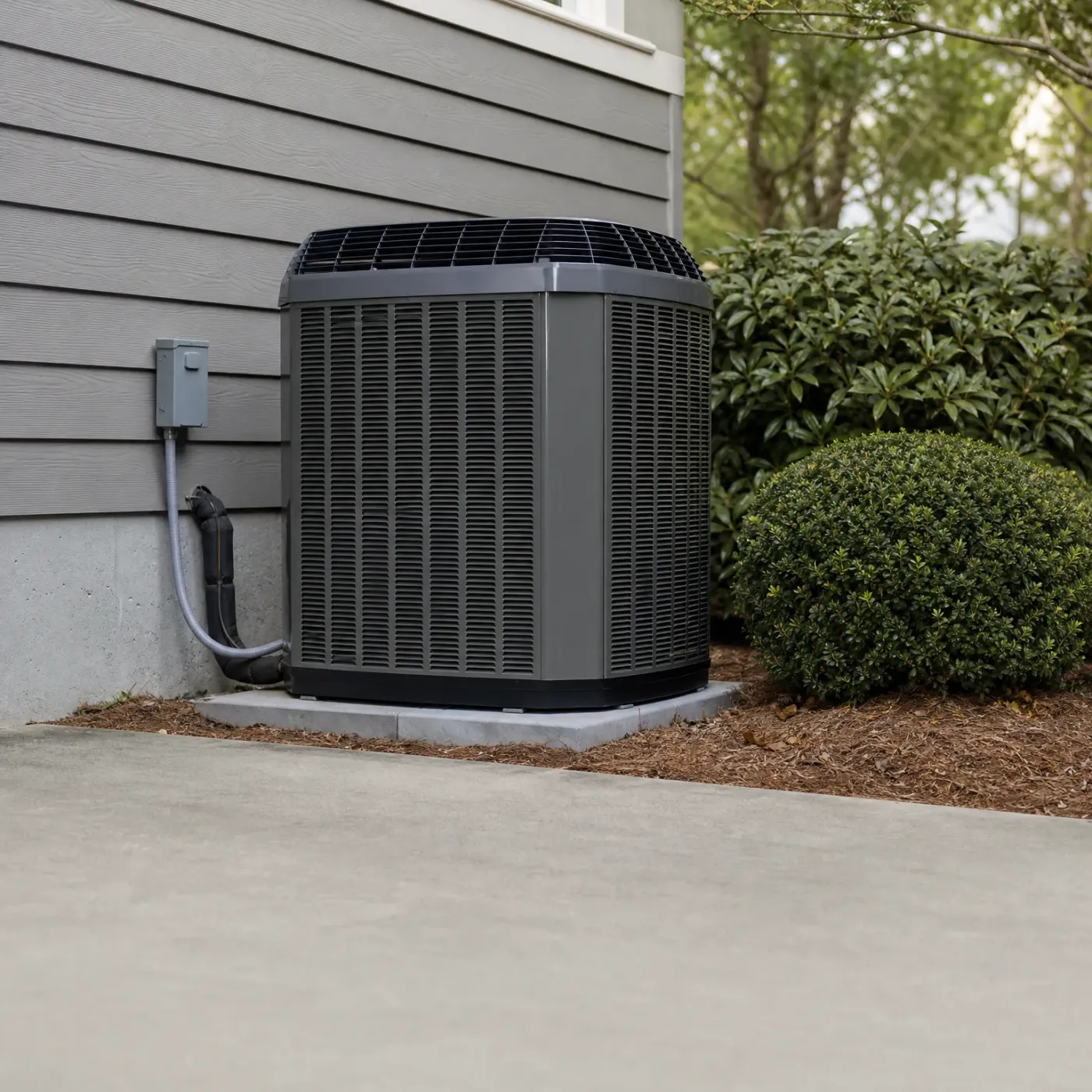
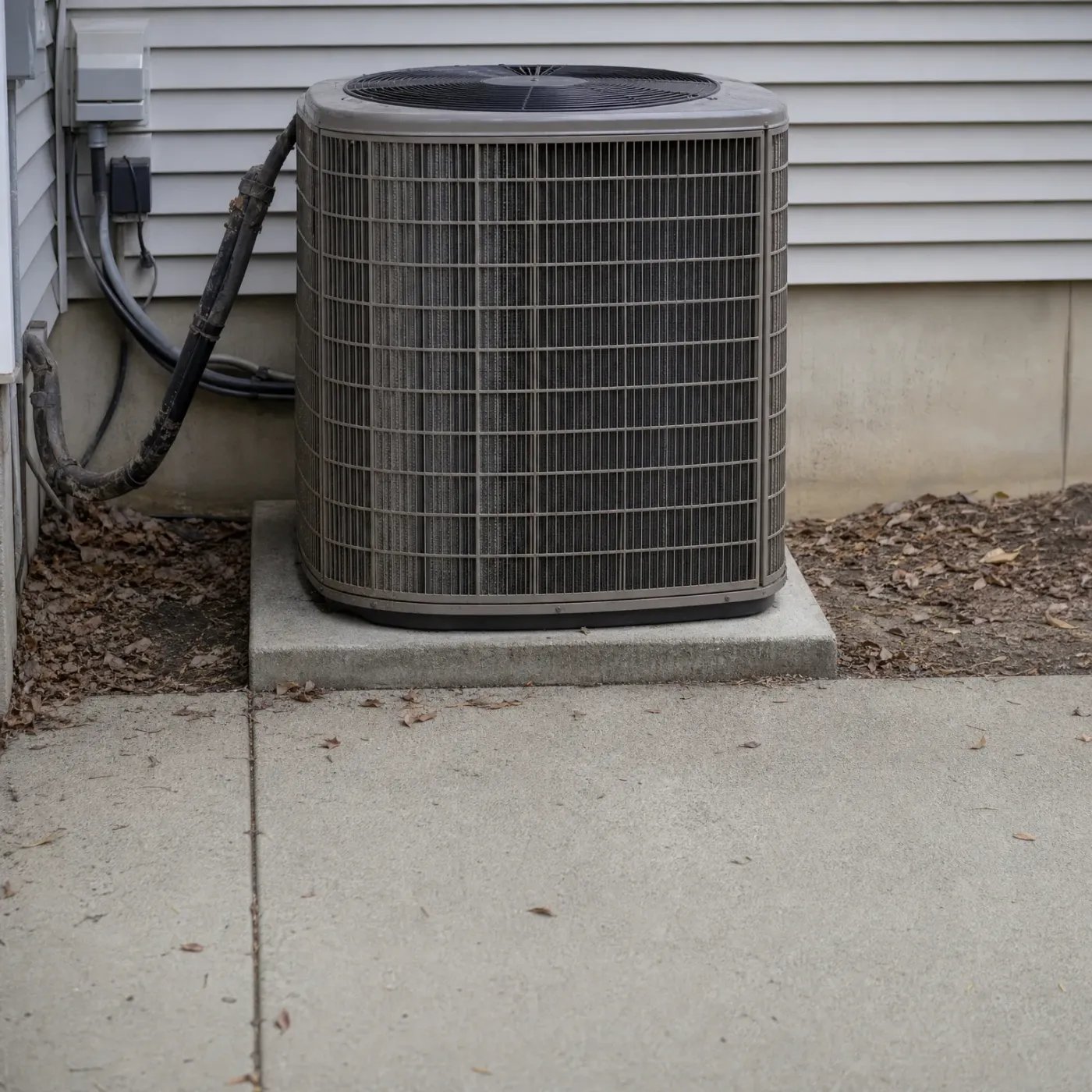
Most of the time it comes down to a handful of parts, and each one fails differently. The capacitor gives the motor its first push to start spinning, and once it swells or splits, that push never comes. Sometimes the motor tries anyway. You'll hear it hum without turning, which usually means the bearings have seized, often from moisture that worked its way into the housing over months or years. Power has to get to the fan in the first place, and a contactor burned at the contacts can cut that off before the motor ever sees voltage. On some units the fan motor runs on its own circuit, separate from the compressor, so you can have a compressor running and a fan sitting dead still. A high-pressure switch tripping will take down the whole outdoor unit, not just the fan, as a safety measure built into the system. And at the disconnect box outside, Florida's humidity corrodes connections faster than it would elsewhere, so a loose or corroded wire there can stop the fan cold even when everything else checks out.
What's Actually Stopping the Fan
- A capacitor that has swollen or split can no longer give the fan motor the jolt it needs to start turning.
- A motor that hums but won't turn is usually seized at the bearings, often from moisture working into the housing over time.
- A contactor stuck open or burned at the contacts cuts power to the outdoor unit before it ever reaches the fan motor.
- Some outdoor units have a fan motor wired separately from the compressor, so the compressor can run while the fan sits still.
- A tripped high-pressure switch will shut the whole outdoor unit down as a safety measure, not just the fan.
- Wiring at the outdoor disconnect corrodes faster in Florida's humidity, and a loose or corroded connection can stop the fan cold.




Hand off the heat pump problem
A fan that won't spin means the unit is sitting there doing nothing while your house sits at whatever temperature it's going to stay at. In a Florida summer that's not a small thing. Humidity doesn't wait for a diagnosis, and neither does the heat building up in the rooms with the worst airflow. You could start calling around, but that means finding a contractor who works on heat pumps specifically, waiting to see if they call back, and explaining the same symptoms again to the next one if the first can't come soon. That's hours you don't have while the house keeps getting worse. Send the request instead and that search becomes someone else's job, not yours. You won't be sorting through quotes or deciding which stranger to trust on your own. One contractor takes it from here, and you get to stop thinking about the outdoor unit and start waiting on a fix instead of a phone call.
Why the outdoor coil matters
The outdoor fan pulls air across the coil to get rid of the heat your house doesn't need. When that fan stops, the coil can't dump heat anywhere, and the system backs up on itself. A heat pump pushes refrigerant through that coil whether the fan is turning or not, so a stuck fan doesn't just mean no cooling. It means heat and pressure building in a coil that has no way to release them. Left running like that for long, the compressor is doing work against a system that can't finish the job, and that wears on a part that costs far more to replace than a fan motor or capacitor.
What the breaker tells you
If the outdoor unit has no power at all, the fan motor is probably fine. A tripped breaker, a blown fuse at the disconnect box, or a bad contactor will stop the fan just as surely as a dead motor would. The difference matters because one is a five-minute fix and the other isn't. If you reset the breaker and it holds, and the unit still doesn't start, the problem has moved past power and into the motor, the capacitor, or the contactor itself. If the breaker trips again right away, something downstream is drawing too much current, and that's worth knowing before anyone opens the unit up.
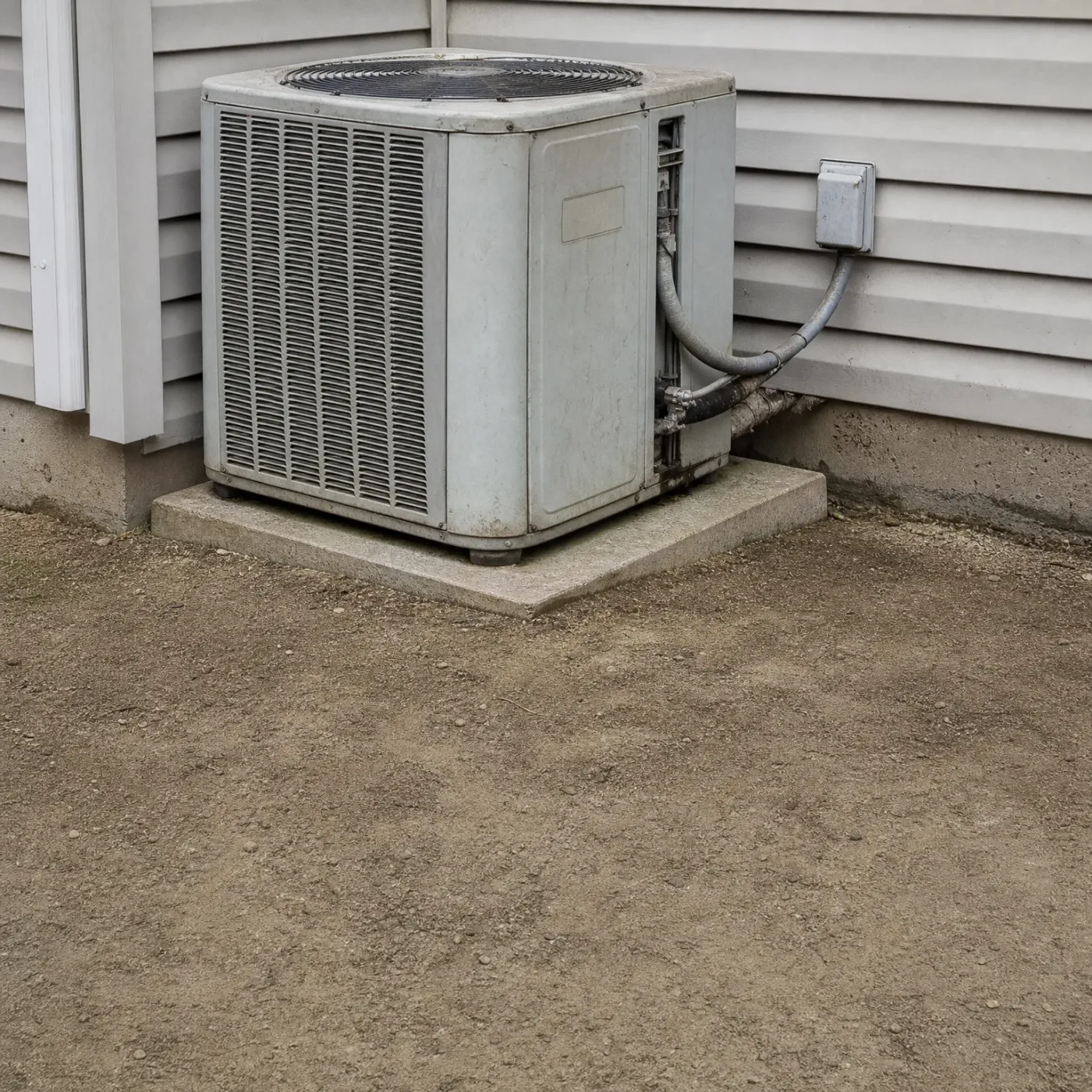
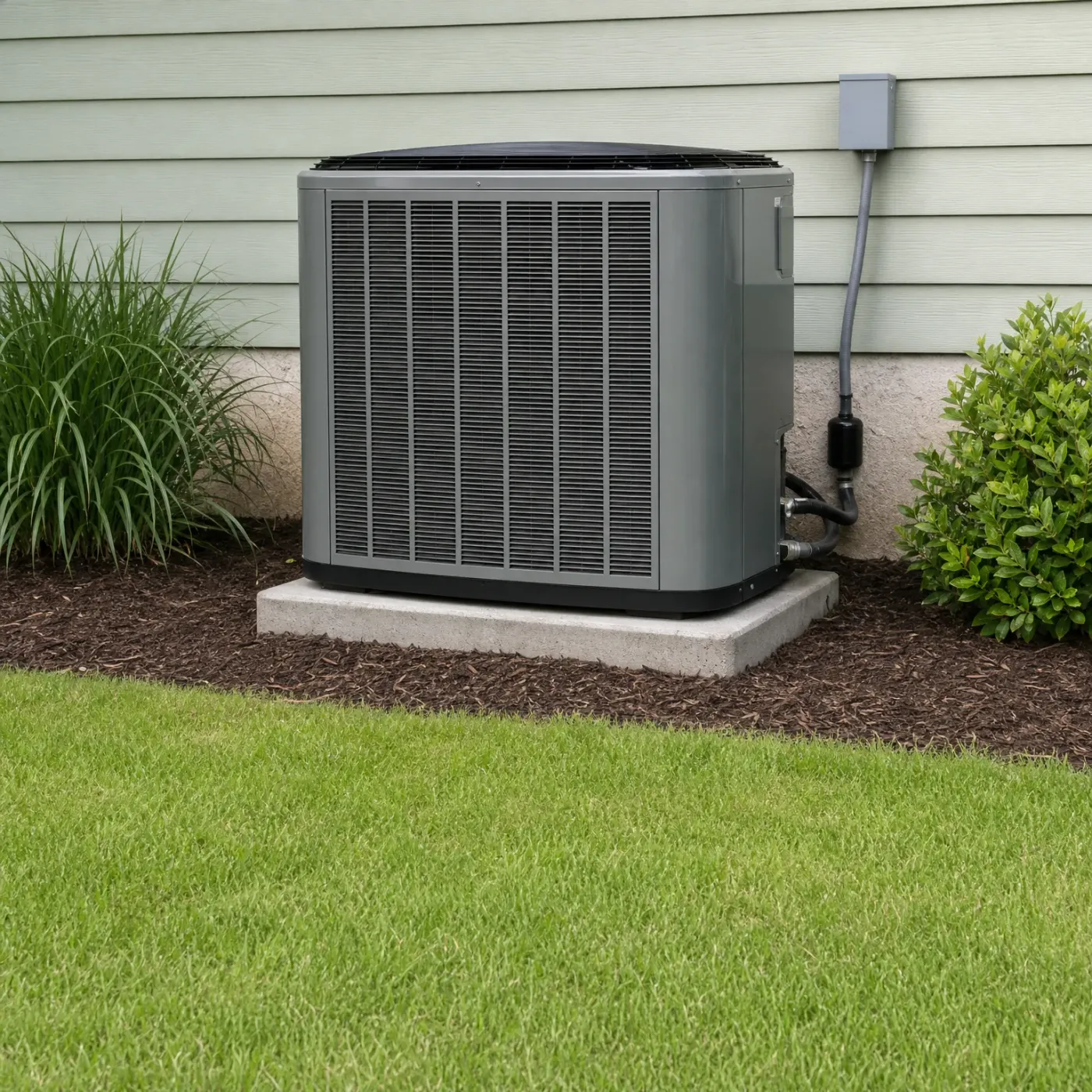
A fan motor that's seized or burned out doesn't start back up on its own, and a cracked capacitor doesn't heal. The unit will sit there the same way tomorrow as it does today.
Once a contractor looks at it, you're done hunting for one. No calling around, no explaining the problem twice, no sorting through quotes. You send the form once and the rest isn't your job anymore.


Power costs 15.21 cents per kilowatt-hour statewide
At 15.21 cents per kilowatt-hour, running a heat pump on emergency strip heat or leaving a struggling system to work overtime adds up fast, since electric heat costs more than a heat pump moving warm air normally. A seized or stalled fan forces the system into that harder, pricier mode until it's fixed.
EIA-861 2025 statewide residential average

A fan that won't spin has a reason, and it's one a contractor can find
A dead outdoor fan comes down to power not reaching it or a motor that's failed, and a few things in between: a bad capacitor, a stuck contactor, bearings seized up from moisture. None of those get better by waiting. The unit will be in the same shape tomorrow morning as it is right now.
You could spend your evening looking up heat pump repair companies, calling the ones that answer, and describing the same problem over and over until someone can actually come out. Or you could send one form and let that part stop being your problem. Once a contractor's on it, you're not the one tracking down who's available or comparing quotes against each other. You already know what's wrong. Now it's a matter of someone qualified getting to your unit.


Heat Pump Repair
Send one request and you're done looking

- Tell a local repair pro what your heat pump is doing.
- A local pro who knows heat pumps gets your details and gets in touch.

- One request and the search for a pro is handled.
- Send it once and finding someone is no longer on you.

- Answer a few questions instead of calling shop after shop.
- Describe your heat pump job once, to one pro.

- Only one pro gets your request, so you hear from one company.
- Your request stays with one local pro.